Thermoformed Agriculture & Construction Covers
A 2.6-meter machine hood,formed in one piece.
Thermoformed Agriculture & Construction Covers are shaped from heated plastic sheet. FUNYO forms single parts up to 2600 × 1600 × 600 mm from sheet up to 15 mm; housings commonly use 8–10 mm. Forming tools take about 1–3 weeks and cost under 1/10 of a comparable injection mold.
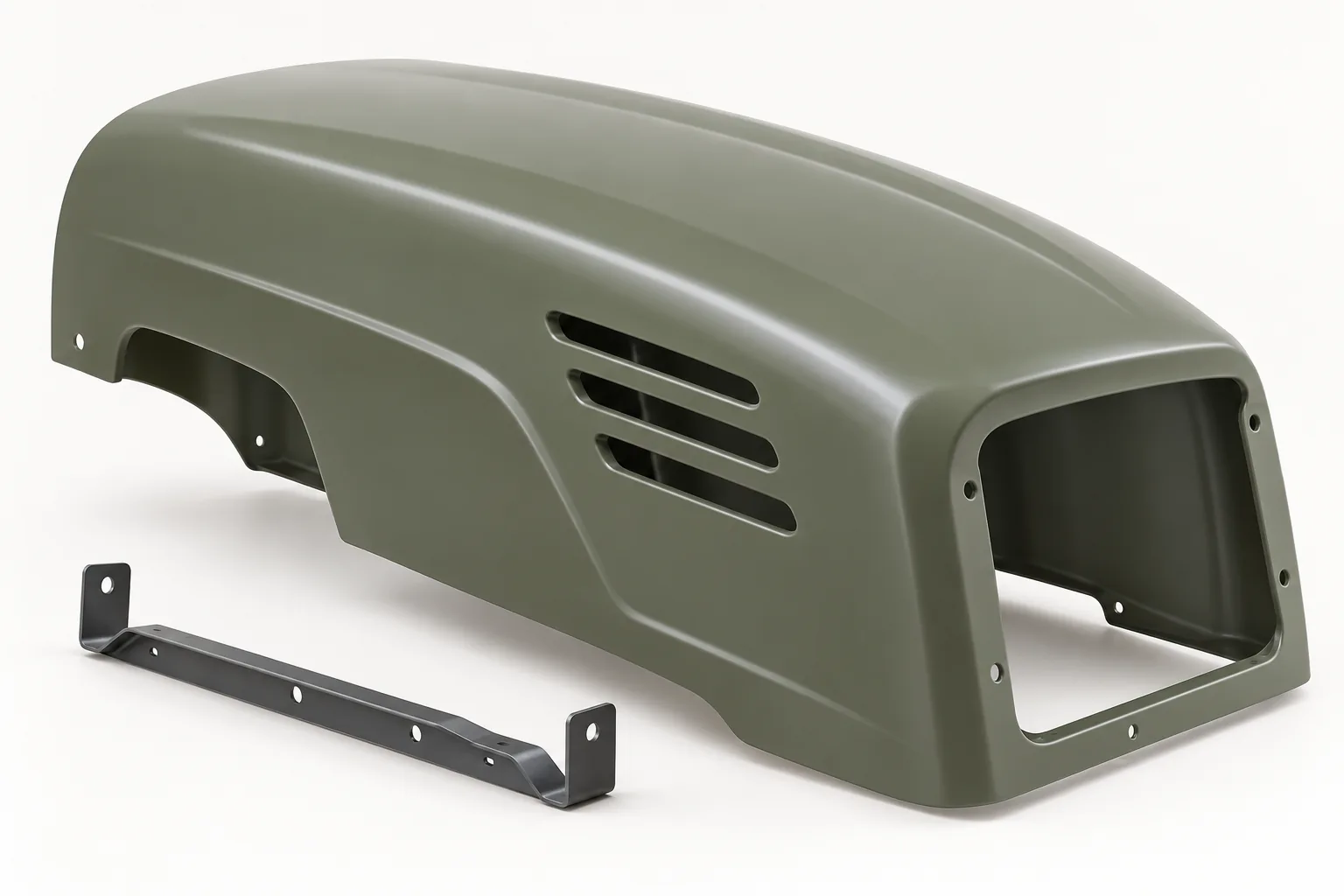
- Max. part size
- 2600×1600×600mmL × W × H, formed in one piece
- Max. sheet thickness
- 15mm8–10 mm is typical for housings
- Tooling lead time
- 1–3weeksvs. about 6–10 weeks for a comparable injection mold
- Tooling cost
- <1/10of a comparable injection mold
- 01Large, one piece
- Up to 2.6 m in one shot
- 02Part-to-part consistency
- Formed on a tool, not laid up by hand
- 03Replace locally
- Wear zones as separate panels
Thermoformed parts for agriculture & construction equipment
Hood, side panels, cab:
each faces different conditions.
Machine parts that suit heavy-gauge thermoforming:
- Agricultural machinery
- Construction equipment
- Garden equipment
- Crop growing
- 01
Engine hoods and side panels
Large curved covers in one piece; service openings and hinge positions follow the service method.
- 02
Cab interiors and instrument housings
Dashboards, headliners and side trim, with color and texture approved as a set.
- 03
Fenders and exterior covers
Impact-prone zones as separate panels, so damage means replacing one piece.
- 04
Seedling trays and growing boxes
Formed trays and boxes for crop growing.
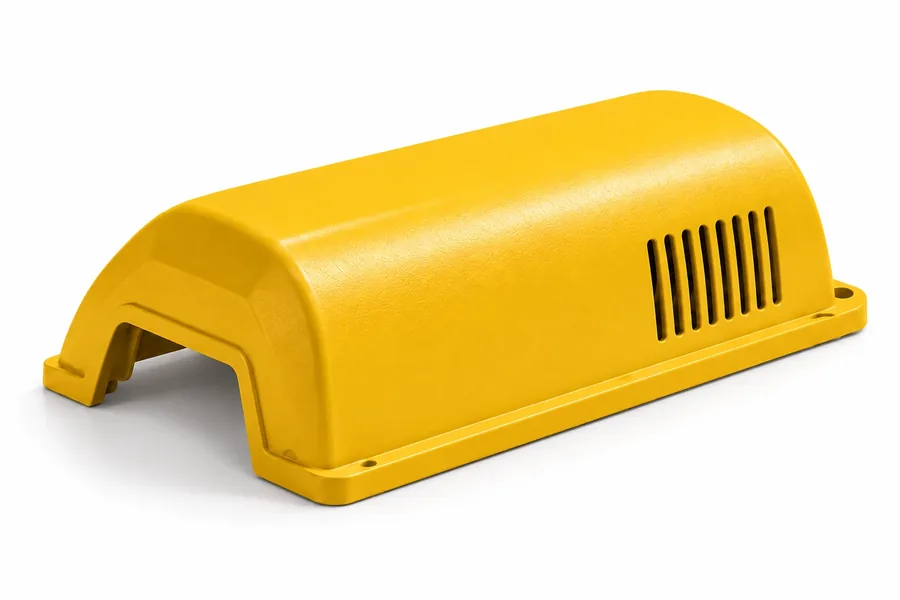
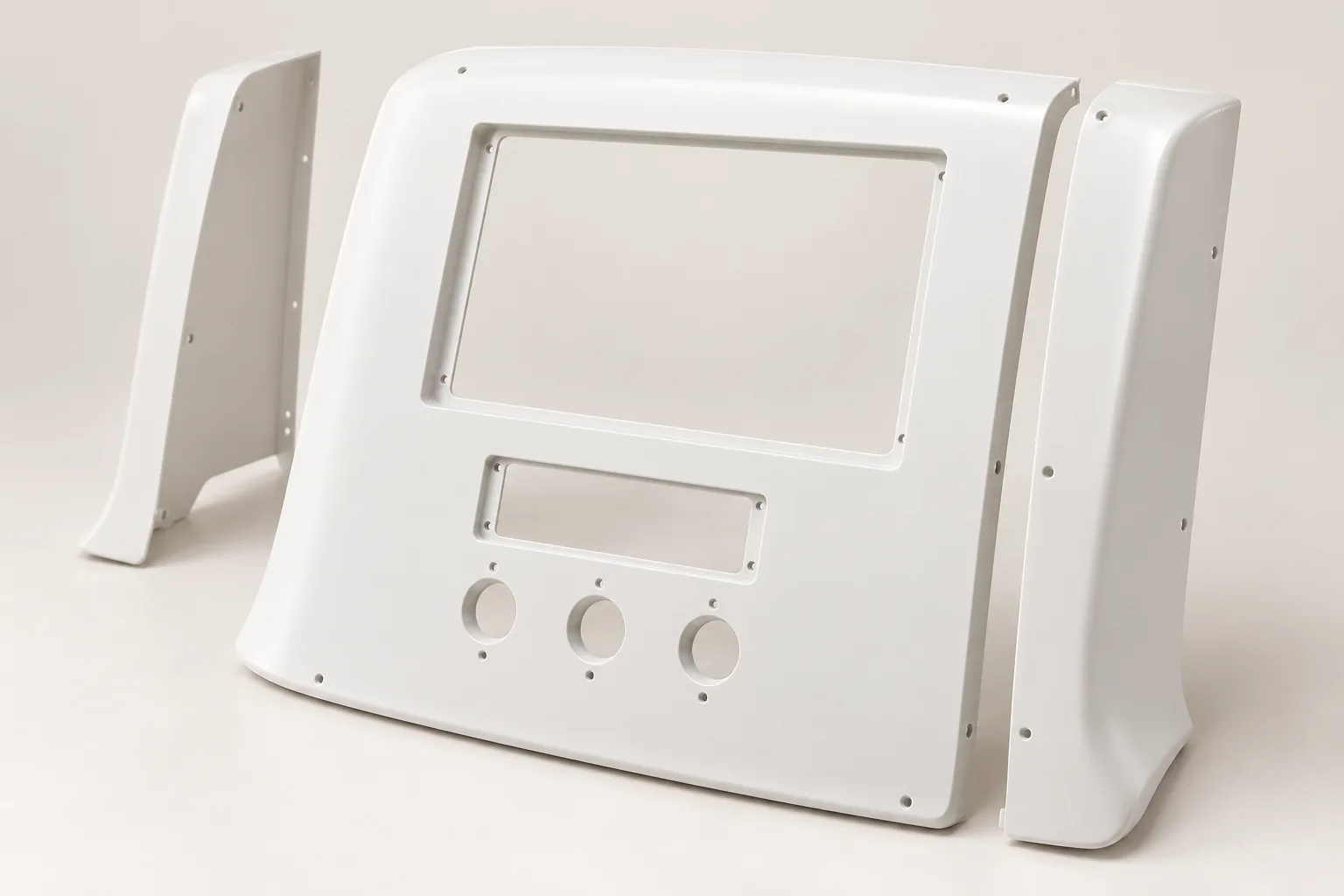
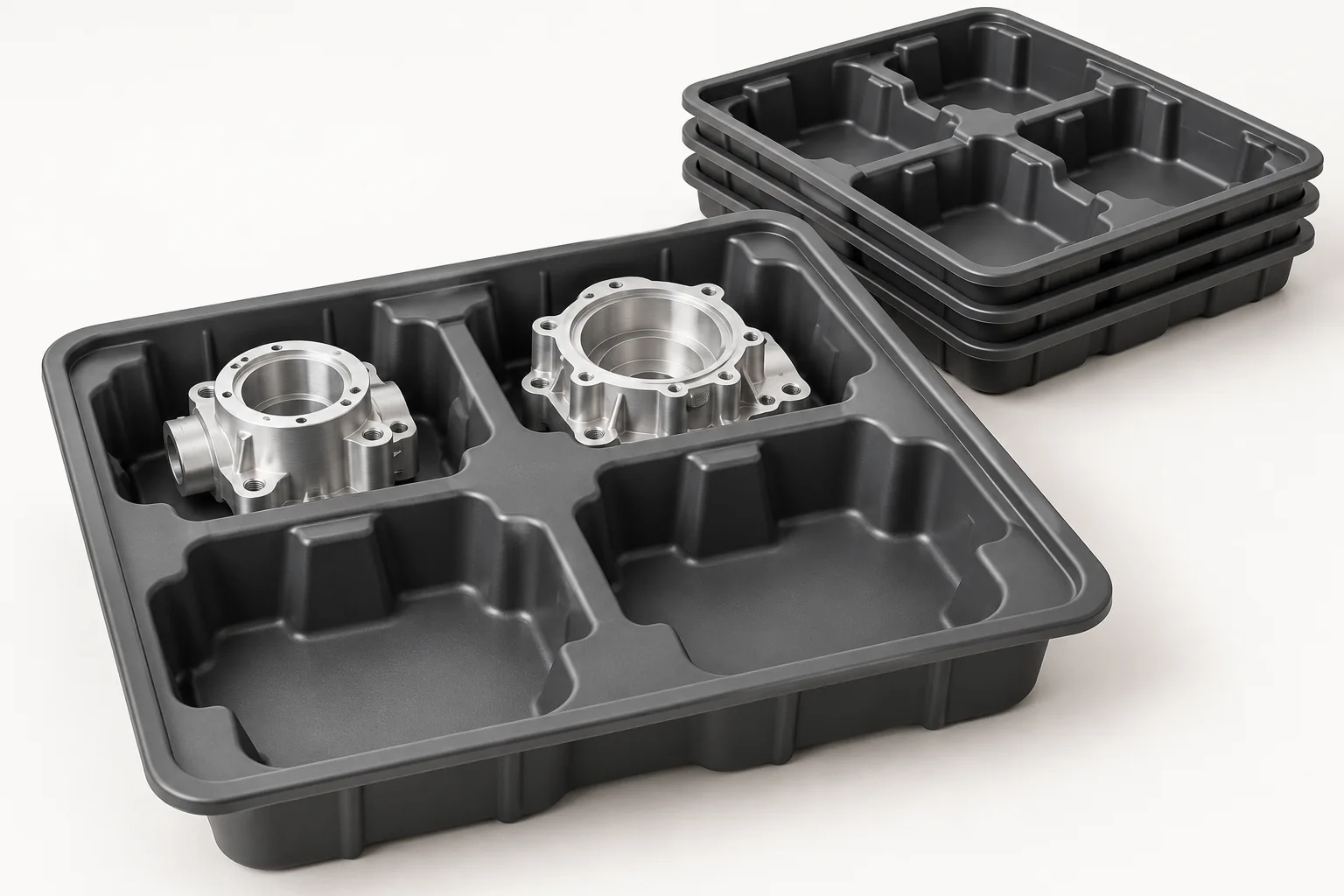
Examples of thermoformed components
Examples:
formed parts you can see.
Formed parts from the FUNYO company profile, picked for this industry. Need something similar? Send a drawing or a photo.
Send drawings, answer in 2 working days- Illustration
Tractor engine hood 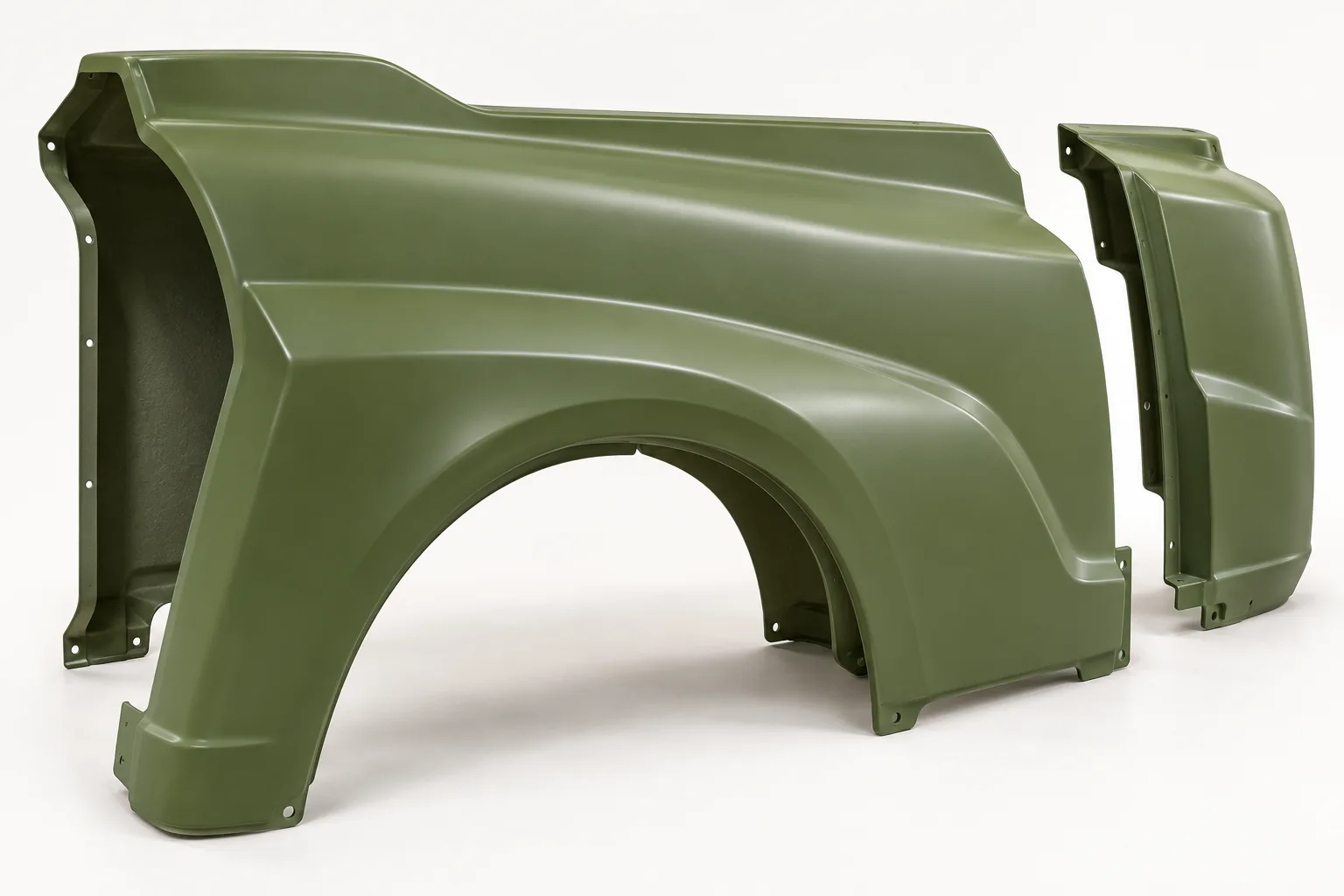 Illustration
Fender and side cover 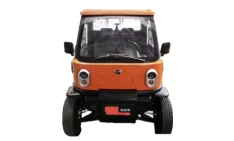
Electric vehicle body 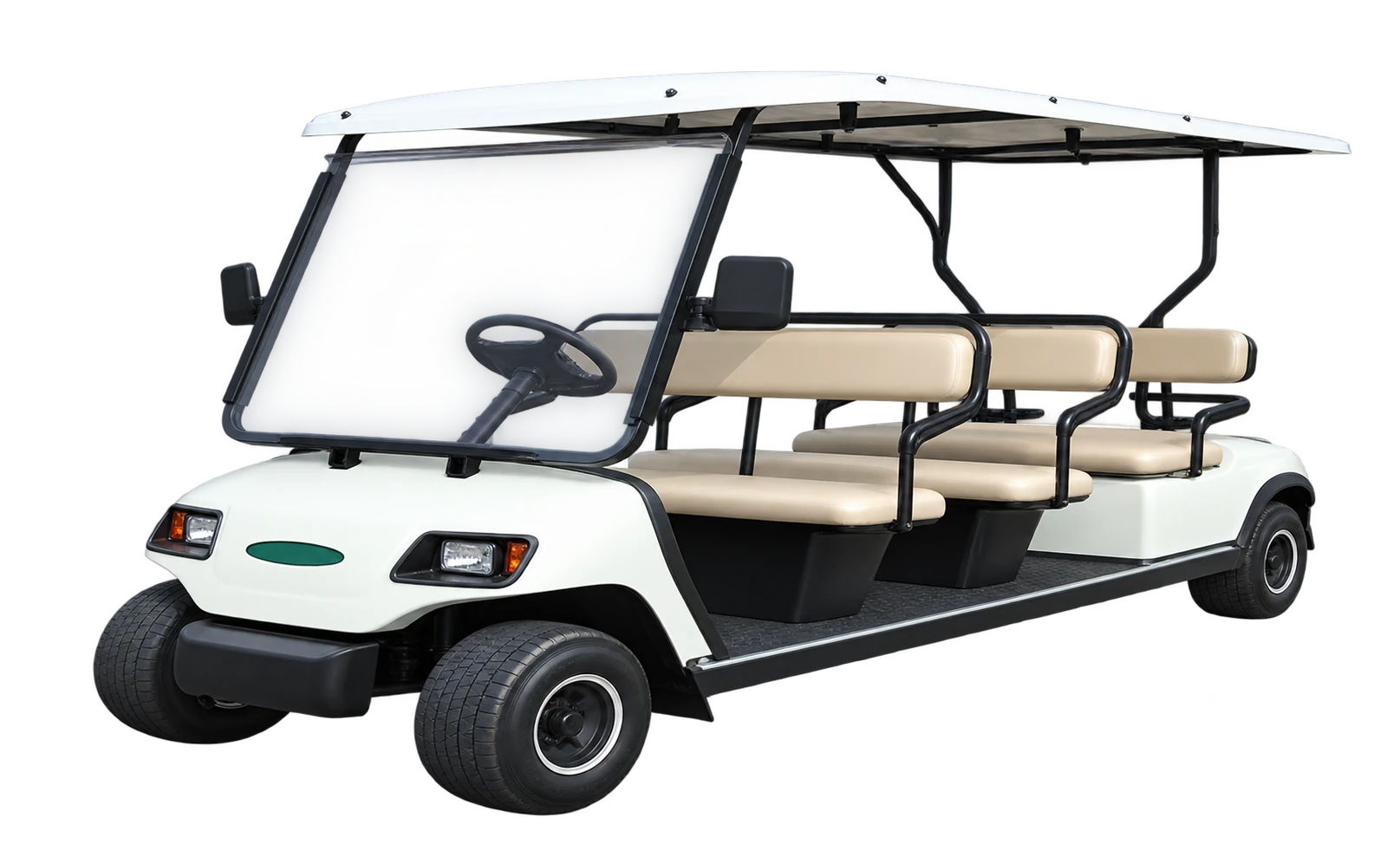
Golf cart roofs and parts
Images from the FUNYO company profile. Some show the complete product; the formed part is the one named in the caption.
Thermoforming compared with other processes
Why machine hoods
move to heavy-gauge.
The same large hood, made three ways:
Send drawings, answer in 2 working days| Heavy-gauge thermoforming | Hand-laid fiberglass | Sheet metal | |
|---|---|---|---|
| Consistency | Tool and machine set every part | Thickness varies by operator | Consistent; curves need welding |
| Curved shapes | Large curves in one piece | Complex curves possible | Mostly bends |
| Production | Machine forming plus CNC trim | Lay-up, cure and finishing; slow | Cut, bend, weld, paint |
| Surface | Color through the sheet, so scratches don't show a base color | Needs gelcoat or paint | Needs anti-rust paint |
General comparison; we confirm against your drawing, material and volumes.
Assembly, access and interface design
Think about flying stones
when you choose the material.
On one machine, upward-facing panels, areas near the ground and the engine bay face very different conditions:
Sun and surface
Large upward-facing panels get years of sun: a weatherable grade or surface treatment, with color checked on samples.
Needed: region of use and color requirements
Contact and local impact
Areas near the ground that stones and branches hit get thicker sections, flanges or separate panels.
Confirmed: impact zones and supports
Heat and service
Near the engine, a heat-resistant grade chosen from temperature and distance; service openings follow service frequency.
Needed: heat-source temperature and service tasks
Sheet materials and project requirements
Turn “durable outdoors”
into specific conditions.
8–10 mm sheet is typical, up to 15 mm.
Heavy-gauge thermoforming| Outdoor sun | A weatherable grade or surface treatment, sourced per project and checked on samples. |
|---|---|
| Impact | PC or PE, or thicker ABS with stiffening contours. |
| Engine bay | Give us the real temperature and distance; we choose a heat-resistant grade and verify on samples. |
| Cab interior | ABS is most common; color and texture approved to a master sample. |
Cosmetic covers do not replace the machine's safety guarding.
Factory, CNC trimming and inspection
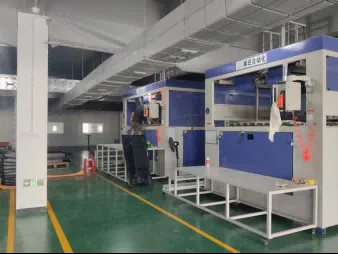
Forming, trimming, inspection:one plant in Zhuhai.
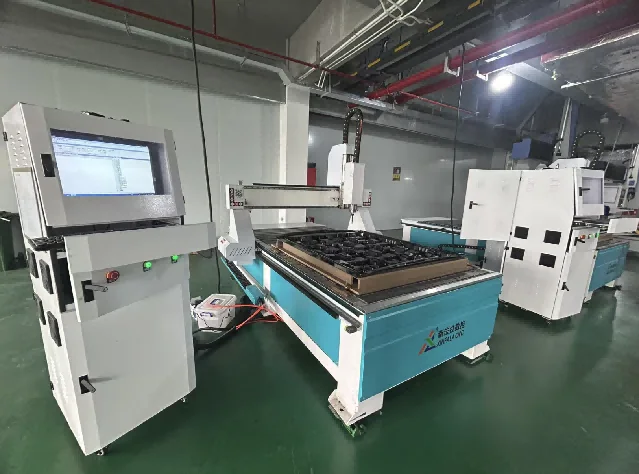
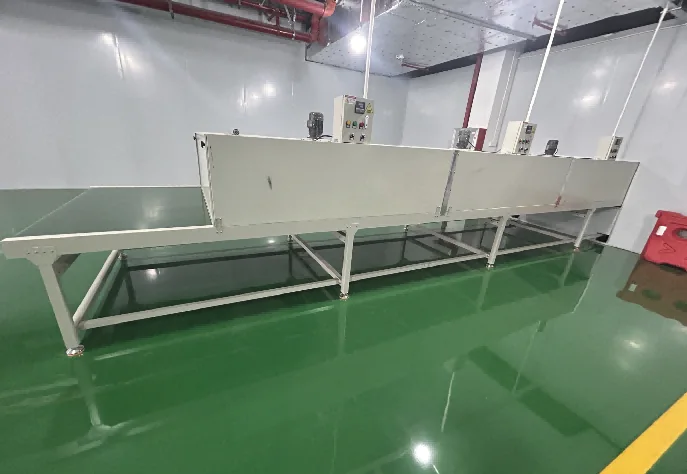
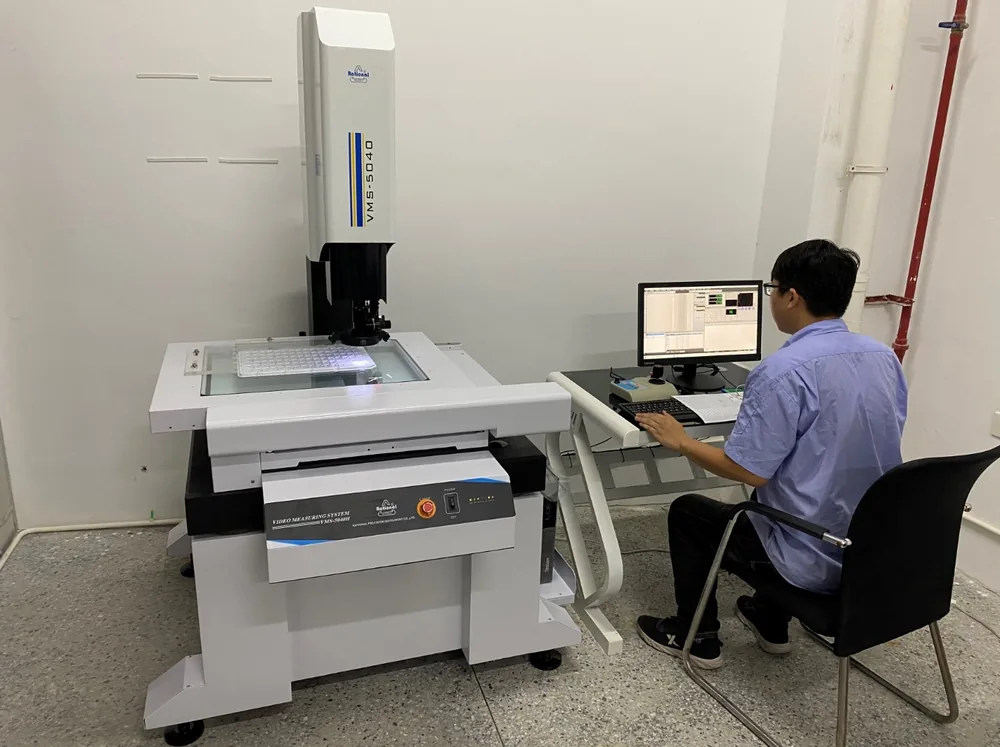
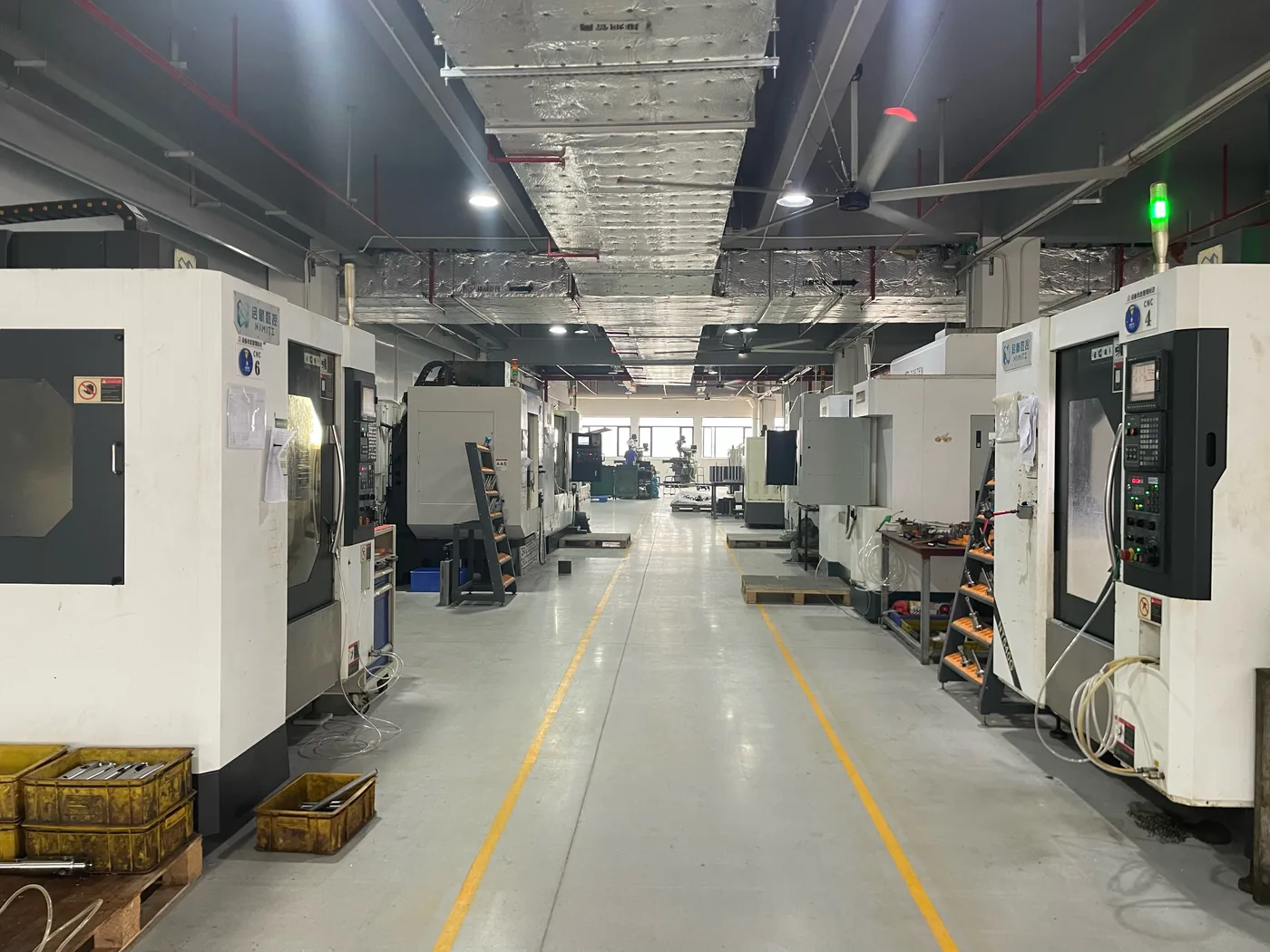
FUNYO started in precision machining in 2004 and has been thermoforming since 2013. Heavy-gauge forming, CNC trimming and dimensional inspection all happen in our Doumen plant, and we machine our own forming tools, so revisions don't wait on outside shops.
Facts you can check
- 2004
- Founded; 20+ years of precision machining
- 2005
- Became a tier-1 supplier to Gree
- ISO 9001 · 14001
- Quality and environmental management certified
- 2024
- Recognized as a High-Tech Enterprise
- ABS · PET/PS
- Own plant for thermoforming sheet
- 4 hours
- Response to design requests
Selected long-term customers













These relationships cover precision formed trays, CNC parts and other work. Listed in no particular order.
Lead time from drawing to delivery
From drawing to production,
and how long each step takes.
Typical timings. Complex parts or special materials get a specific schedule when we quote.
- Within 4 hours
Response
An engineer contacts you to confirm use, size and quantities.
- 2 working days
Evaluation and quote
We tell you whether heavy-gauge fits and quote it side by side with injection molding.
- About 1–3 weeks
Tooling
After design review we machine the forming tool in-house.
- By complexity
Samples
Formed, trimmed and drilled, then fitted to your frame or mating parts.
- Per order
Production
Checked against the approved sample for size and finish, then packed and shipped.
Thermoforming for agriculture & construction equipment: FAQ
Tell us where it's mounted.
We'll start from there.
Bring the hood or cover model, the supporting frame and the real operating conditions. No full drawing? Start with photos and dimensions.
FAQ
Can thermoforming be evaluated for agriculture & construction equipment at 300–3,000 units per year?
300–3,000 units is a quoting scenario, not a break-even threshold. Compare part size, assembly, material, tooling and unit costs before selecting a process.
What size and sheet thickness are available for agriculture & construction equipment?
The maximum single part is 2600 × 1600 × 600 mm, with sheet up to 15 mm. Housings commonly use 8–10 mm sheet. Finished dimensions depend on geometry and trimming allowance.
Which sheet grades should I specify for agriculture & construction equipment?
ABS, PC, PVC, PETG and PP can be formed. PC or PETG can be evaluated for transparent parts. PE, weatherable, flame-retardant and antistatic grades are sourced and sampled for the project.
How long does tooling for agriculture & construction equipment take?
Forming tooling costs under 1/10 of a comparable injection mold and takes about 1–3 weeks. Comparable injection molds take about 6–10 weeks. Confirm the scope against the drawing and material.
What should I send for a 2-working-day thermoforming assessment for agriculture & construction equipment?
Send drawings or photos, dimensions, annual and first-order quantities, assembly interfaces and operating conditions. We respond in 4 hours and provide the applicability assessment and comparison quote in 2 working days.
Last updated:
Web Design & GEO by RUXO Studio