Thermoformed Housings & Enclosures
A 2.6-meter housing.No injection mold first.
Thermoformed Housings & Enclosures are shaped from heated plastic sheet. FUNYO forms single parts up to 2600 × 1600 × 600 mm from sheet up to 15 mm; housings commonly use 8–10 mm. Forming tools take about 1–3 weeks and cost under 1/10 of a comparable injection mold.
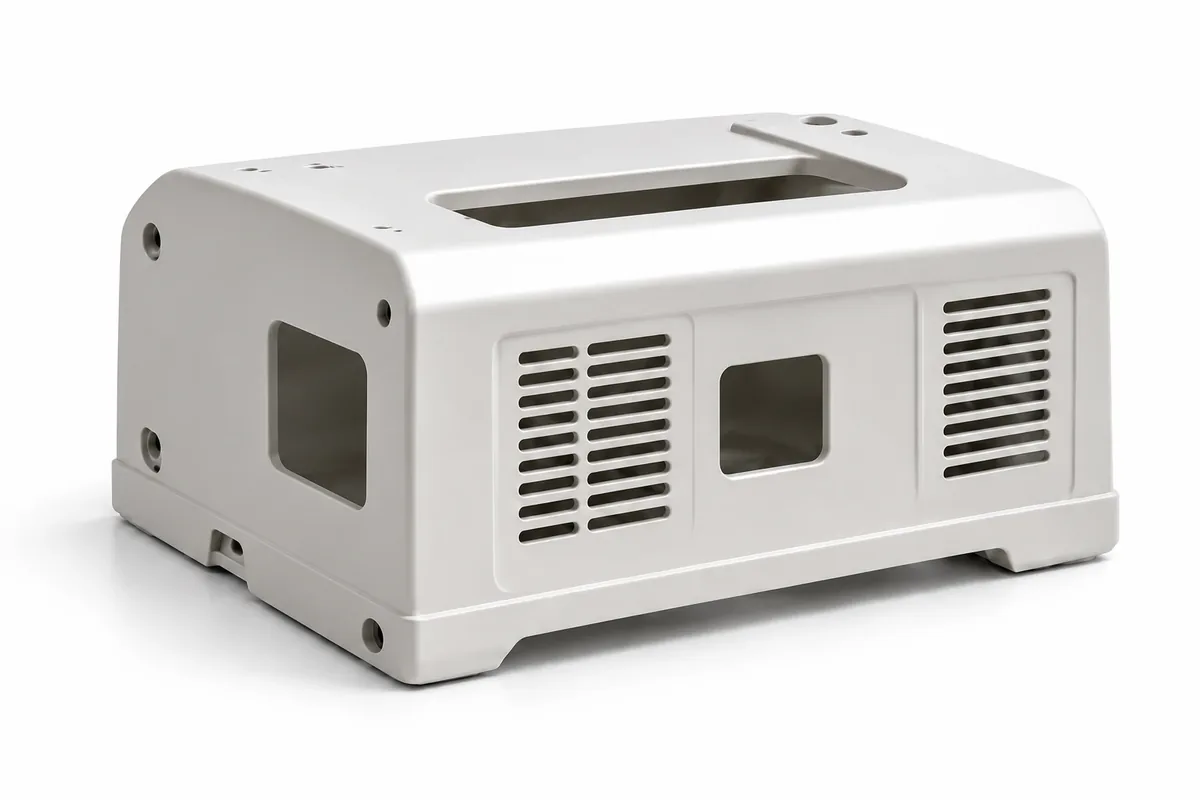
- Max. part size
- 2600×1600×600mmL × W × H, formed in one piece
- Max. sheet thickness
- 15mm8–10 mm is typical for housings
- Tooling lead time
- 1–3weeksvs. about 6–10 weeks for a comparable injection mold
- Tooling cost
- <1/10of a comparable injection mold
Sizes and forms of heavy-gauge thermoformed housings
From a control box
to a 2.6-meter machine housing.
- 01
Equipment housings
Upper/lower shells · bezels · side panels
Exterior parts for medical devices, instruments and robots. Curves and generous radii form in one shot; display windows, button holes and vents are CNC-cut to your drawing.
- 02
Enclosures & lids
Deep box + lid · main shell + rear cover
Control boxes, energy-storage and power-module enclosures, test units. Mounting holes, cable entries and sealing faces are machined to drawing; brackets and threaded inserts fit as separate parts.
- 03
Large body parts
One piece or split
Up to 2.6 m long and 600 mm deep in one piece, so one seam fewer. Larger parts are formed in sections and joined. Used for autonomous-equipment bodies, leisure equipment and construction-machine covers.
Maximum size is the forming envelope for one part. Draft, radii and trim allowance come off that; we confirm the finished size at evaluation.
Three common forms, one route: tool, form, CNC trim.
Examples
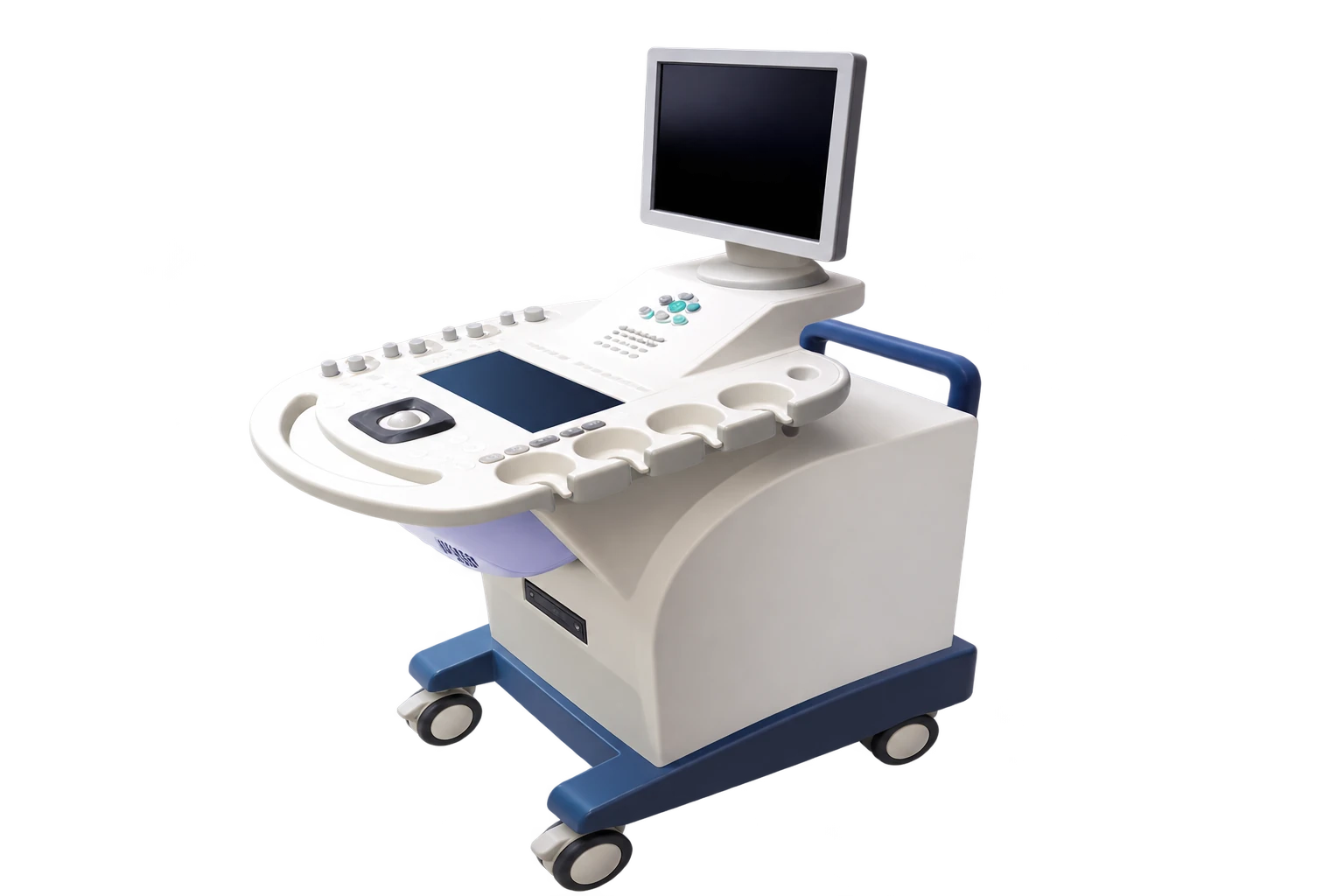
Medical equipment housing 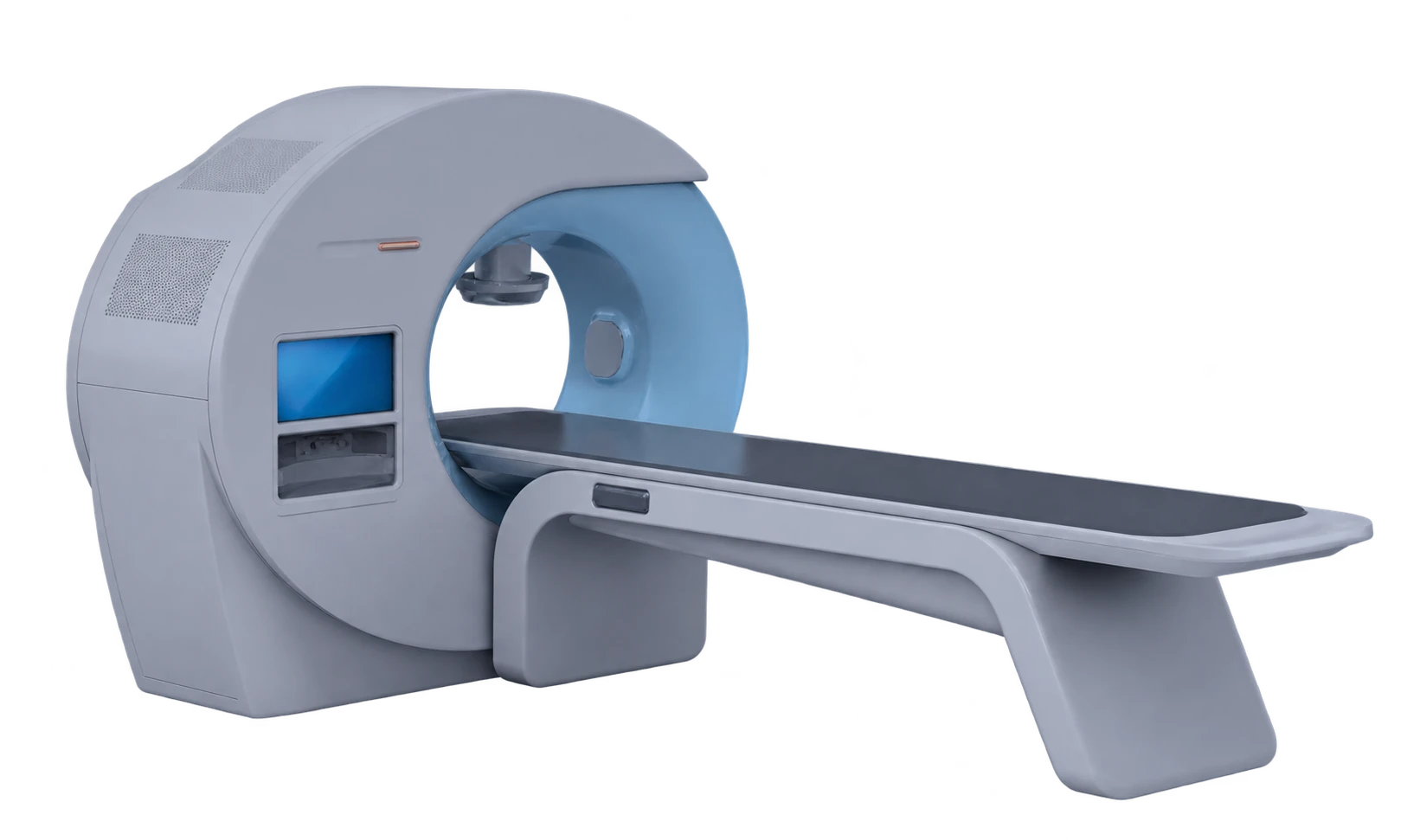
Large medical equipment housing 
Power battery housing 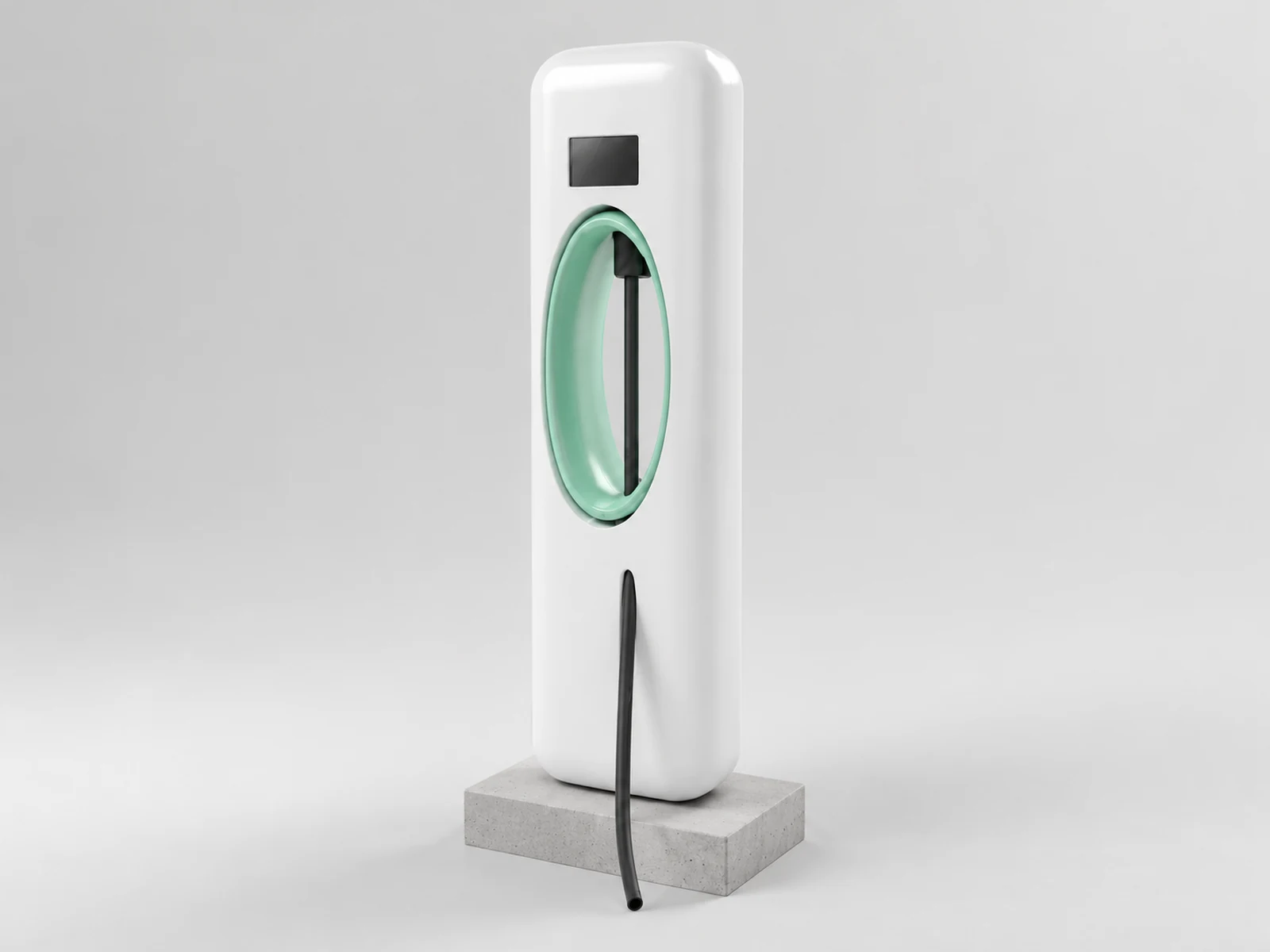 Illustration
EV charger housing 
AI and service robots 
Drone shell
Photos are from FUNYO’s company profile; the caption identifies the thermoformed part. Images labelled “Illustration” are AI-generated.
Where thermoformed housings are used
Applications
for this product.
Explore related industries through equipment applications and component requirements.
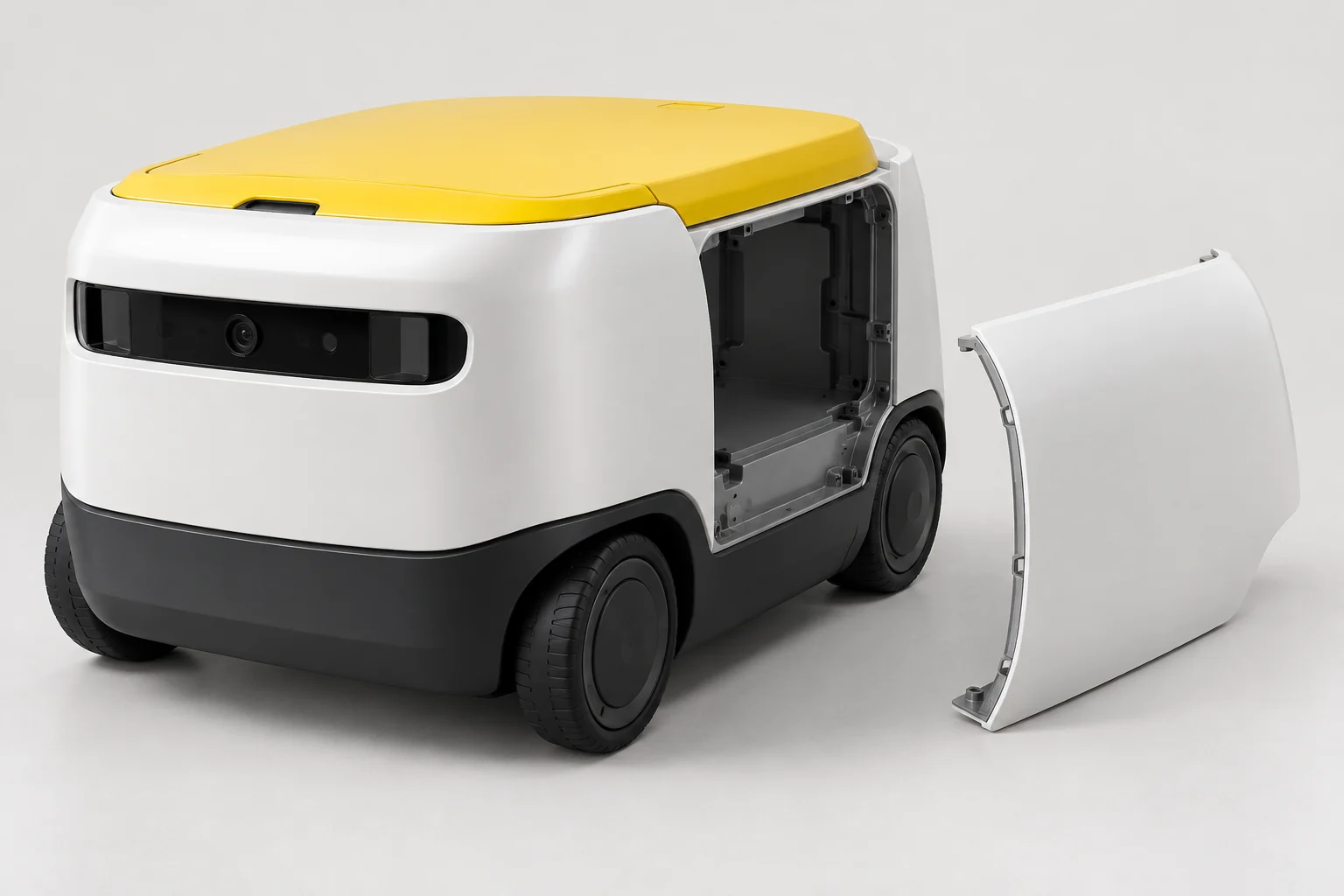 Illustration01
Robotics & autonomous equipment
Body shells and top covers, sensor fascias, service and battery-access covers.
Explore the industry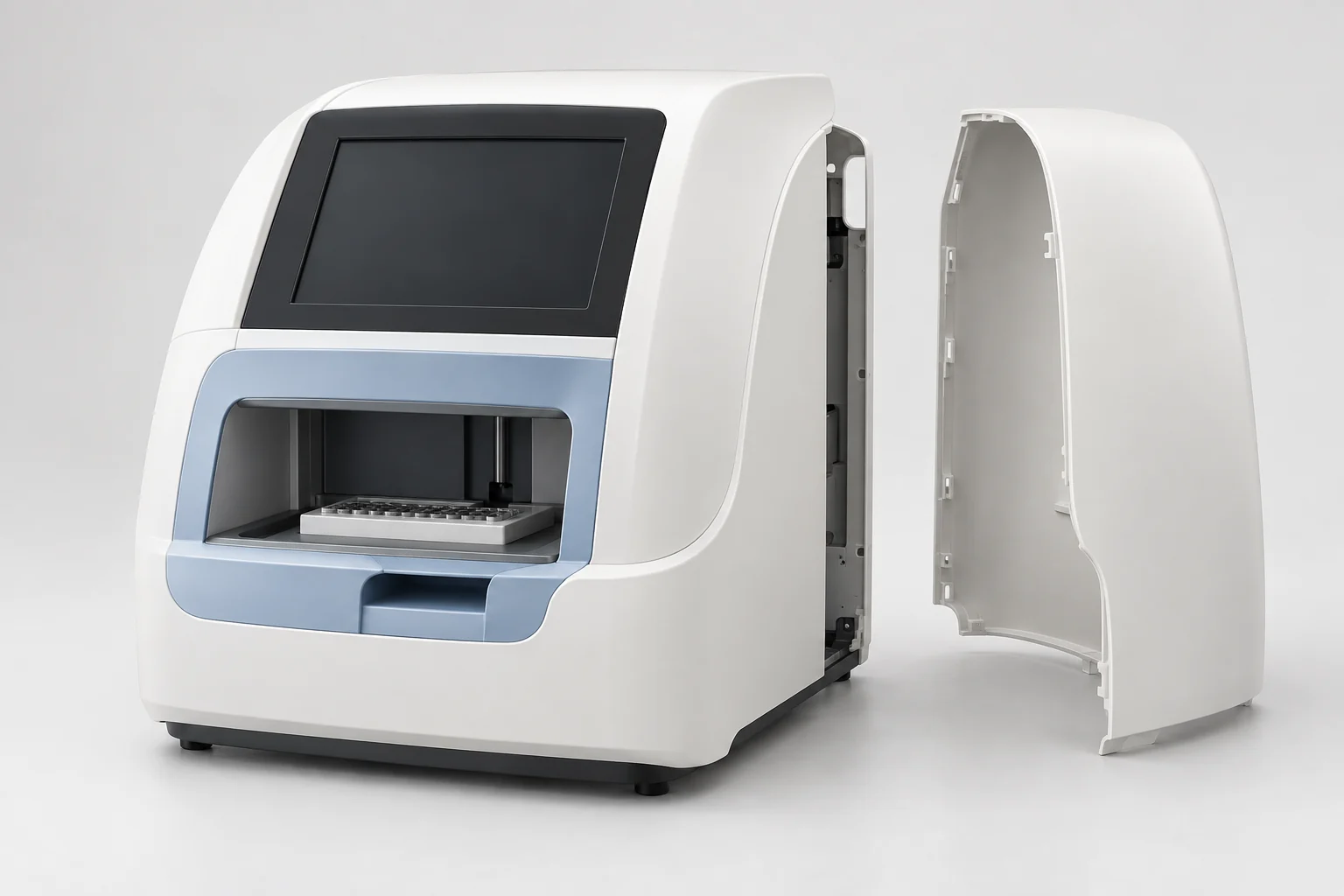 Illustration02
Medical & diagnostic equipment
Main housings, upper and lower shells, front bezels, side panels and service covers.
Explore the industry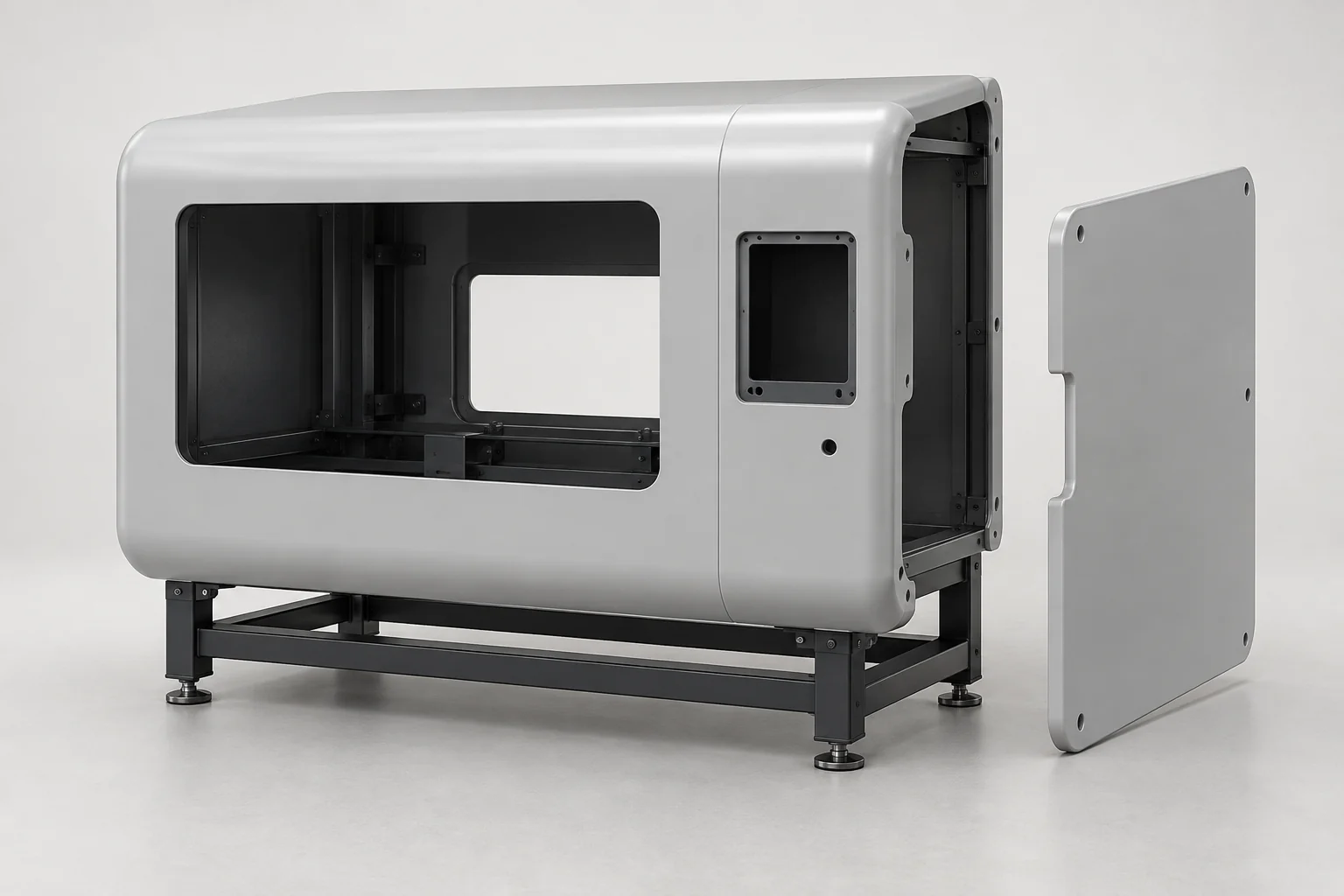 Illustration03
Industrial automation & machinery
Full housings and control boxes for inspection and automation equipment.
Explore the industry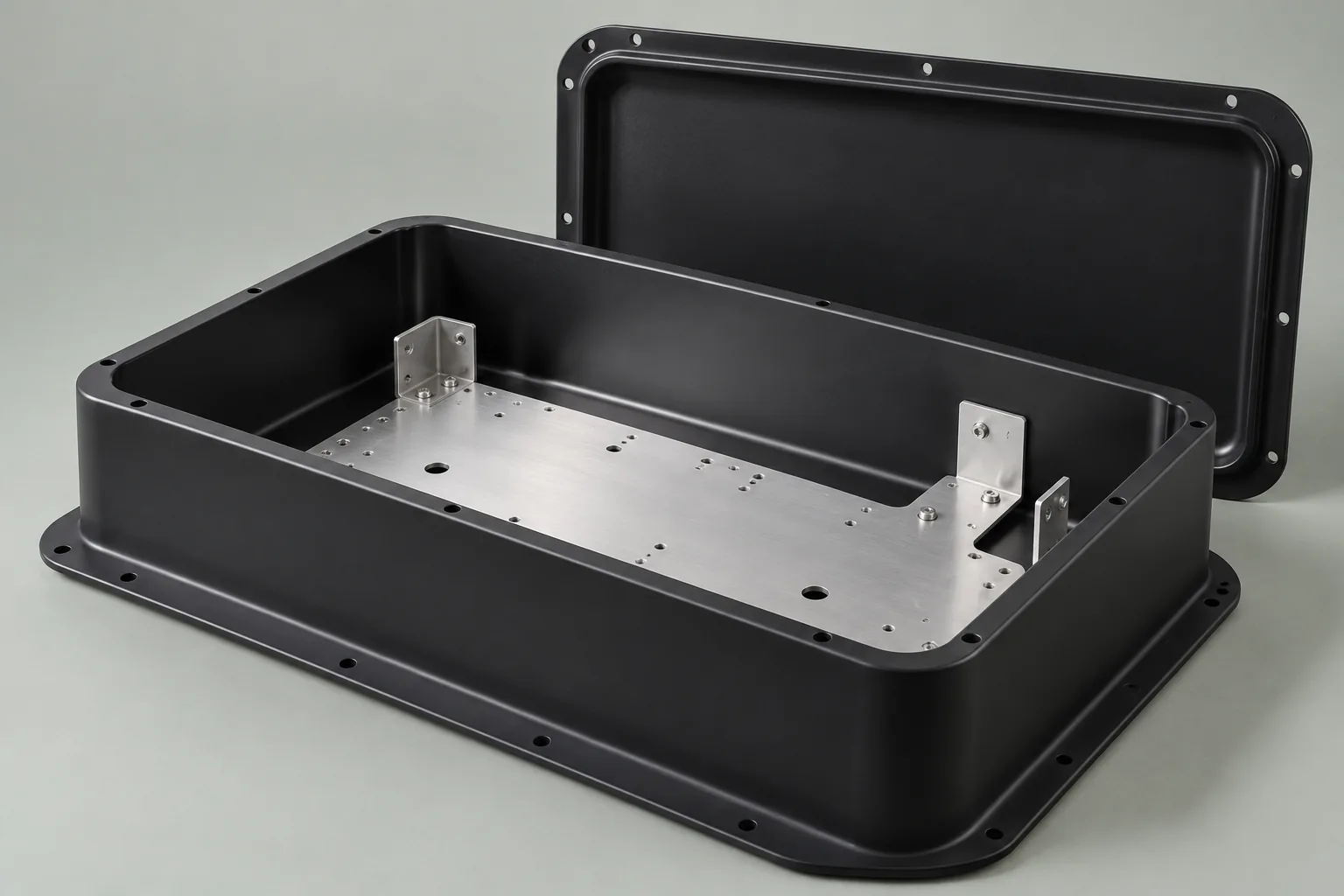 Illustration04
EV, battery & energy systems
Enclosures for energy-storage and power units, and charger housings.
Explore the industry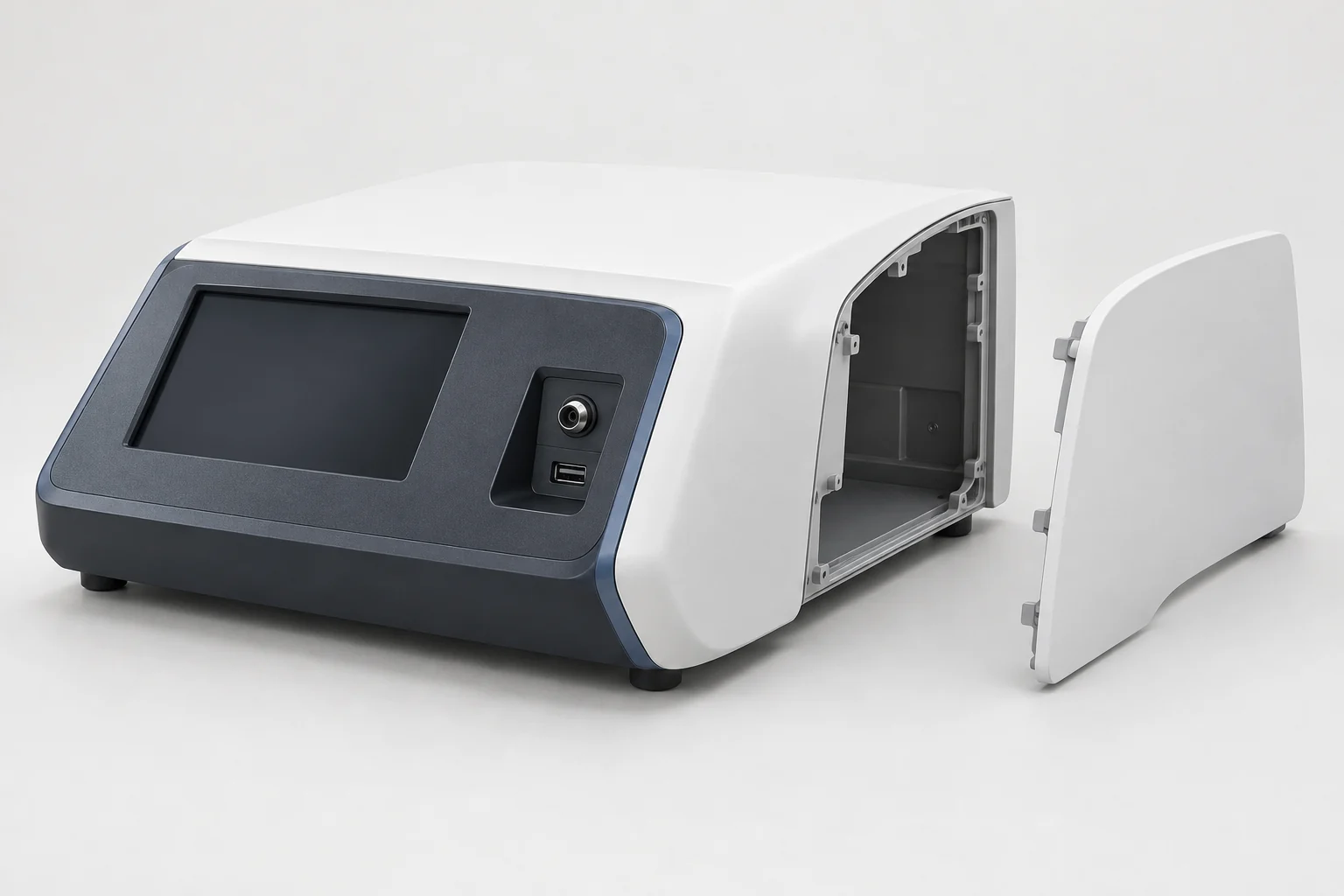 Illustration05
Electronics & advanced equipment
Instrument housings, upper and lower shells, module service covers.
Explore the industry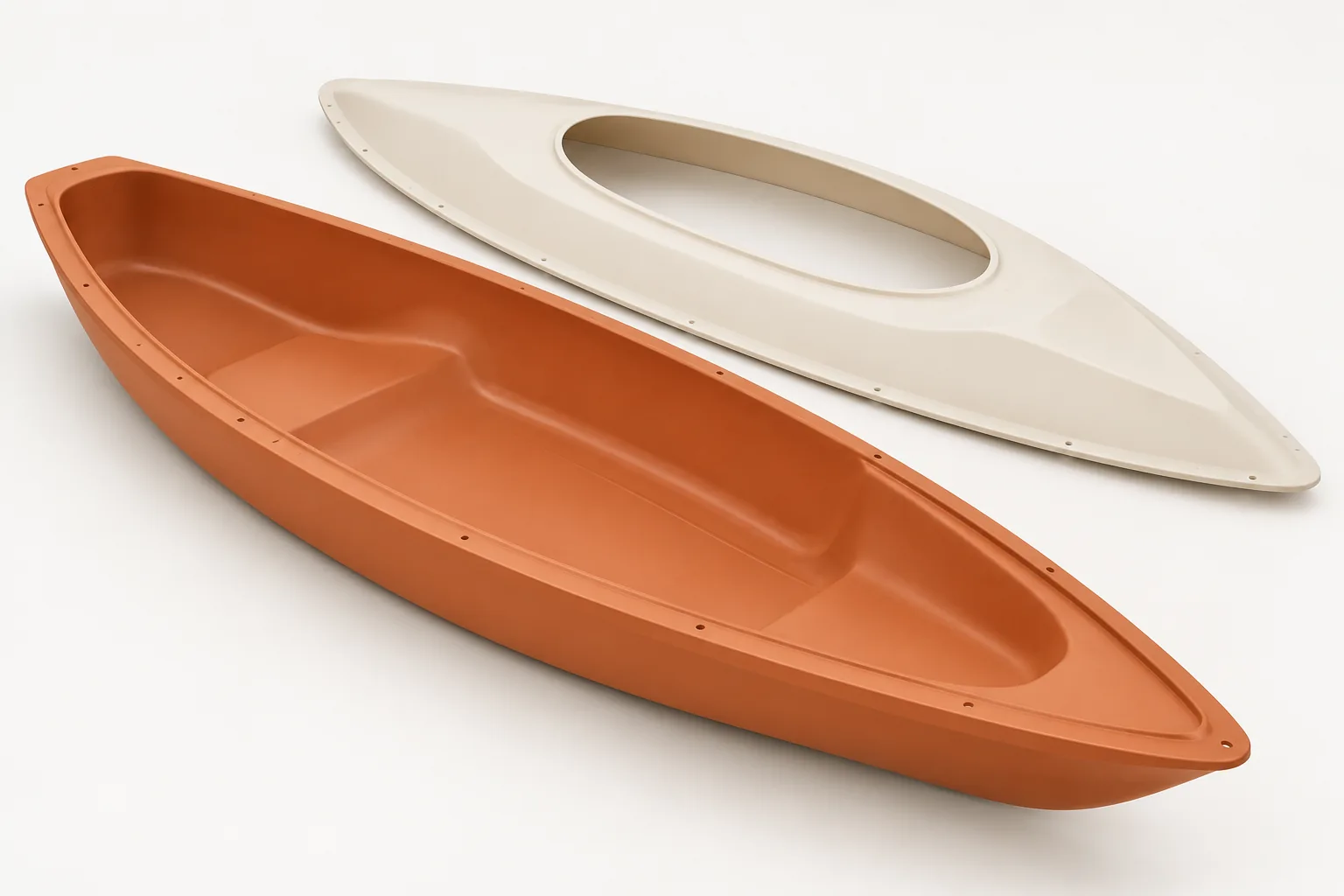 Illustration06
Marine, sports & recreation
Large body parts for amusement rides and leisure equipment.
Explore the industry
Heavy-gauge thermoforming vs injection molding vs sheet metal
Big part, modest volume:
molds and sheet metal don't pay.
For the same large housing, the three routes differ mainly in tooling, lead time and the cost of a revision.
| Heavy-gauge thermoforming | Injection molding | Sheet metal | |
|---|---|---|---|
| Tooling cost | Under 1/10 of an injection mold | High, especially for large parts | Mostly bending fixtures |
| Tooling lead time | About 1–3 weeks | About 6–10 weeks | Little or no tooling |
| Annual volume | Hundreds to low thousands | 10,000 and up | Low to medium |
| Shape and finish | Large curves and radii in one piece; one show side | Fine detail on both sides | Mostly flat and bent; curves need welding |
| Corrosion | Plastic, won't rust | Plastic, won't rust | Needs a protective coating |
| Changing only the openings | Edit the CNC program; same tool | Modify the mold: costly and slow | Redraw and re-cut |
General comparison; we confirm against your drawing, material and volumes.
Opening styles for thermoformed enclosures
One enclosure,
three ways to open it.
We start with how the internals go in and where the unit is serviced, then decide how to split the enclosure. Select a style to see where it fits.
Deep box + separate lidLoaded from the top
Components drop in from above; the lid comes off on its own. Common for control boxes and energy-storage or power modules.
Upper and lower shellsCloses around the components
Two shells close around the internals; the parting line and datums are fixed before tooling. Common for instruments, medical devices and robot bodies.
Main shell + rear access coverServiced from the back
The front stays clean; a rear cover handles installation and service. Common for equipment that is opened often.
Hinges, brackets and threaded inserts fit as separate parts. For waterproof or flame-retardant enclosures, tell us the target rating and we evaluate material and design together.
Sheet materials for thermoformed housings
Start with where it goes,
then choose the sheet.
Housings typically use 8–10 mm sheet, up to 15 mm. Every sheet below runs on our heavy-gauge formers; weatherable or flame-retardant grades are sourced per project.
Heavy-gauge thermoforming| Sheet | Typical use |
|---|---|
| ABS | The most common housing material: stiff and easy to machine. FUNYO runs its own ABS sheet plant, so color and cost are easier to control. |
| PC | When you need more toughness and impact resistance, or a clear window. |
| PVC | Chemical resistance, and parts with flame-retardance requirements. |
| PETG | Clear or translucent cosmetic parts and display housings. |
| PP / PE | Chemical and impact resistance for boxes and handling parts, at low weight. |
Exact grade, color and texture are approved on physical swatches and samples.
Factory, CNC trimming and inspection
Forming, trimming, inspection:one plant in Zhuhai.
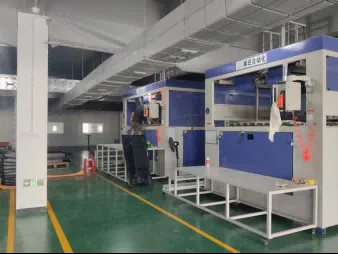
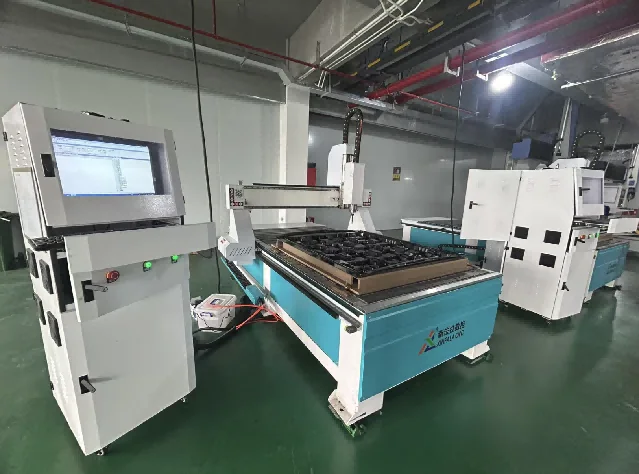
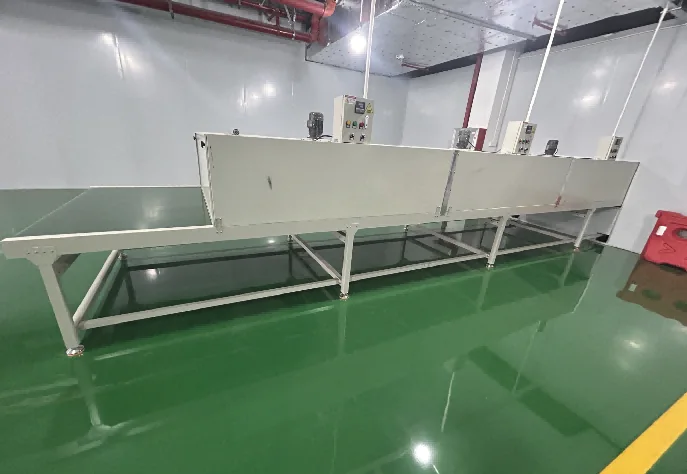
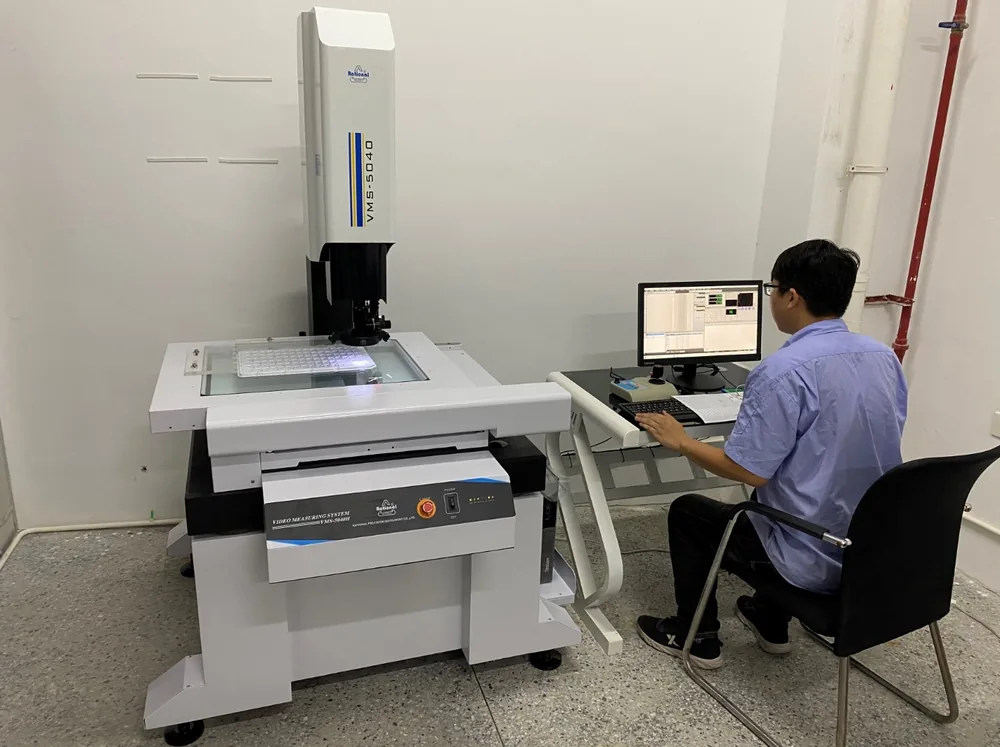
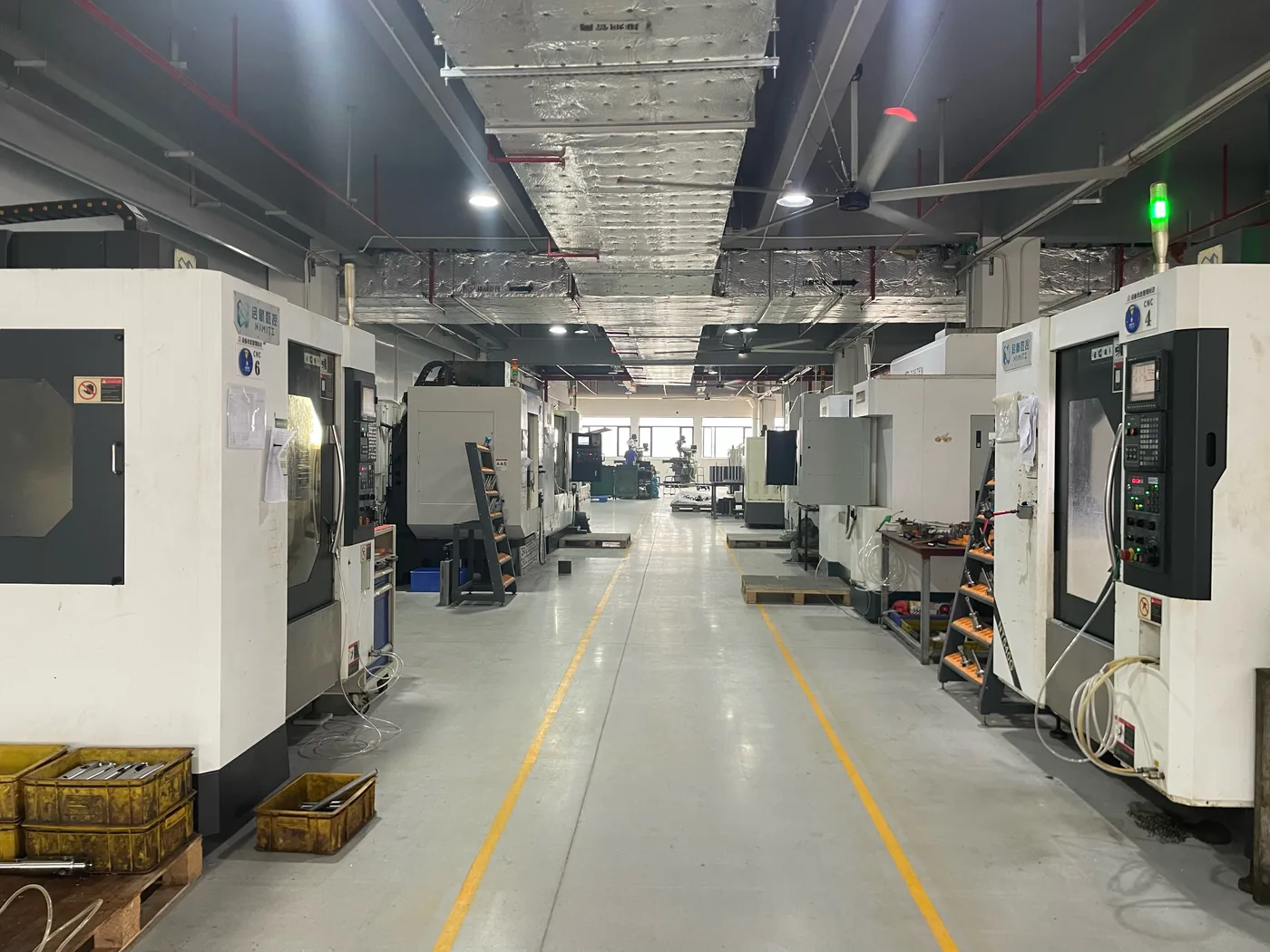
FUNYO started in precision machining in 2004 and has been thermoforming since 2013. Heavy-gauge forming, CNC trimming and dimensional inspection all happen in our Doumen plant, and we machine our own forming tools, so revisions don't wait on outside shops.
Facts you can check
- 2004
- Founded; 20+ years of precision machining
- 2005
- Became a tier-1 supplier to Gree
- ISO 9001 · 14001
- Quality and environmental management certified
- 2024
- Recognized as a High-Tech Enterprise
- ABS · PET/PS
- Own plant for thermoforming sheet
- 4 hours
- Response to design requests
Selected long-term customers













These relationships cover precision formed trays, CNC parts and other work. Listed in no particular order.
Lead time from drawing to delivery
From drawing to production,
and how long each step takes.
Typical timings. Complex parts or special materials get a specific schedule when we quote.
- Within 4 hours
Response
An engineer contacts you to confirm use, size and quantities.
- 2 working days
Evaluation and quote
We tell you whether heavy-gauge fits and quote it side by side with injection molding.
- About 1–3 weeks
Tooling
After design review we machine the forming tool in-house.
- By complexity
Samples
Formed, trimmed and drilled, then fitted to your frame or mating parts.
- Per order
Production
Checked against the approved sample for size and finish, then packed and shipped.
Heavy-gauge thermoformed housings: FAQ
What should this housing cost?
Send the drawing and we'll work it out.
Tell us the equipment, outside dimensions and expected annual volume. We'll reply whether heavy-gauge fits and quote it side by side with injection molding.
FAQ
For 300–3,000 equipment housings a year, should I use thermoforming or injection molding?
300–3,000 units is a quoting scenario, not a break-even threshold. Compare part size, assembly, material, tooling and unit costs before selecting a process.
What size and sheet thickness can a thermoformed housing reach?
The maximum single part is 2600 × 1600 × 600 mm, with sheet up to 15 mm. Housings commonly use 8–10 mm sheet. Finished dimensions depend on geometry and trimming allowance.
How does thermoforming tooling cost compare with injection molds, and how many weeks does it take?
Forming tooling costs under 1/10 of a comparable injection mold and takes about 1–3 weeks. Comparable injection molds take about 6–10 weeks. Confirm the scope against the drawing and material.
Does moving CNC-cut openings for a new model require another forming tool?
If the external geometry, sheet and forming datums stay unchanged, we can evaluate a CNC program and fixture change. Changes to the formed shape require a separate tooling review.
Can medical or industrial housings meet a UL 94 or IP rating?
Provide the target rating first. Material grades are sourced and sampled per project; the housing, seals and assembly must be assessed together. Final ratings depend on testing the complete equipment.
Which sheet materials are available for housings and transparent windows?
ABS, PC, PVC, PETG and PP can be formed. PC or PETG can be evaluated for transparent parts. PE, weatherable, flame-retardant and antistatic grades are sourced and sampled for the project.
Can I receive a response in 4 hours, and when will thermoformed samples be ready?
We respond in 4 hours and provide an applicability assessment and injection-molding comparison quote in 2 working days. Forming tooling takes about 1–3 weeks; sample timing is assessed against the part geometry.
Can a housing project of about 3,000 parts per year apply for no tooling charge?
Housing projects of about 3,000 parts a year under an annual supply agreement can apply for an assessment. The quotation and contract define charges, amortization and tool ownership; eligibility is not automatic.
Last updated:
Web Design & GEO by RUXO Studio