Compare the process. Define the project.
Heavy-gauge thermoforming shapes heated plastic sheet into parts such as equipment housings; FUNYO tooling takes about 1–3 weeks, versus about 6–10 weeks for a comparable injection mold. Heavy-gauge tooling cost is under 1/10 of the comparable mold; the complete project still needs a matched quotation.
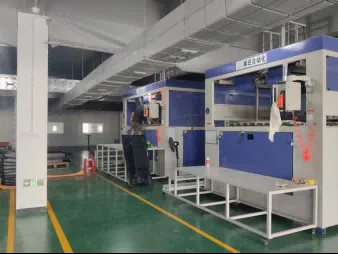
Start with the part, not an annual-volume rule
Heavy-gauge thermoforming shapes a heated plastic sheet against a forming tool, followed by trimming and any specified openings. Injection molding is an alternative to compare when the design needs detail on both sides, integrated ribs or fine snap features. The decision starts with the geometry and assembly requirements of the actual part. A quotation for a smooth outer shell cannot stand in for a quotation for the same shell with internal structural features, inserts and a different finishing requirement.
Describe which face the user sees, which edges meet neighboring parts, and how the housing opens during installation or maintenance. A separate lid, upper and lower shells, and a main body with a rear access cover create different forming and assembly questions. Include the frame or mating-part information needed to evaluate these interfaces. Annual demand belongs in that same brief, but it does not decide the process on its own. A scenario of 300–3,000 parts a year is a starting point for comparison, not a published break-even threshold.
Compare tooling with the same scope
FUNYO's confirmed forming-tool lead time is about 1–3 weeks, compared with about 6–10 weeks for a comparable injection mold. The heavy-gauge forming-tool cost is under 1/10 of that comparable mold. These statements describe a comparison of tooling routes. They do not provide an absolute tooling price, a complete production schedule or a guaranteed saving on every assembly. Material, geometry and the contents of the quotation still need to match before the comparison is meaningful.
Ask each quotation to identify what the tooling line includes. Separate the forming or molding tool from trimming fixtures, assembly fixtures, sample work, material approval, finishing and any project-specific verification. Confirm what happens when the drawing changes after approval and which revision the quoted tool follows. A supplier should not be asked to infer whether a cover drawing includes its brackets or whether a window is part of the formed sheet. Clear scope lets the buyer compare the confirmed tool-cost relationship without silently treating other work as included.
Comparison and selection table
| Decision item | Heavy-gauge thermoforming | Injection molding comparison |
|---|---|---|
| Tooling lead time | About 1–3 weeks | About 6–10 weeks for a comparable mold |
| Tooling cost relationship | Heavy-gauge tooling under 1/10 of a comparable injection mold | Comparison reference; project quote required |
| Form and openings | Formed sheet with CNC-trimmed edges and openings | Evaluate geometry, integrated details and the mold |
| Cost crossover | Requires project tooling and unit-cost inputs | Requires the same scope and quantity assumptions |
Use total project cost without inventing a crossover quantity
A process decision needs both the initial investment and the cost of supplied parts. Compare tooling, samples and agreed one-time work separately from the unit price at each requested order quantity. Include secondary machining, assembly, inspection, packaging and delivery on the same basis. If one quotation includes those operations and another stops at an unfinished shell, a lower headline price does not answer the purchasing question. The buyer needs a boundary around the supplied part before comparing totals.
A simple planning model writes total cost as fixed project cost plus quantity multiplied by the applicable supplied-part cost. That model is a calculation method, not a statement of FUNYO prices. A crossover quantity can only be calculated after both processes have comparable fixed and variable inputs. It should not be inferred from the tooling ratio alone. Where a unit price changes with order size, compare the actual quotation tiers rather than drawing one straight line through all volumes. Keep uncertainty visible in the purchasing worksheet until those inputs are confirmed.
See the break-even method and calculation sheet for the detailed calculation.
Separate opening changes from changes to the formed shape
A thermoformed housing may use the same formed outer shape across several equipment models while CNC programs define different windows, vents and mounting holes. The existing FUNYO product range describes this route for panels and fascias. It is relevant when the change is in a trimmed opening and the formed geometry, sheet and datums remain suitable. It is not a promise that every new model can use the same tool. Moving a split line or changing the main envelope can create a different tooling problem.
Before requesting a revision quote, mark the surfaces that stay unchanged and the features that move. Provide a drawing revision, the affected model, mating parts and the intended use of existing samples. Ask for confirmation of the CNC program and fixture implications as well as the forming-tool implications. Keep old and new versions identifiable in the project documents so that a correct part for one model is not accepted against another model's drawing. This separates a manufacturing change from an assumption about tool reuse.
Select sheet and finished-wall requirements together
FUNYO forms ABS, PC, PVC, PETG and PP sheet. PE, weatherable, flame-retardant and antistatic grades are sourced and sampled per project. The confirmed maximum starting sheet thickness is 15 mm, and housings commonly use 8–10 mm sheet. Starting sheet thickness is not a statement that every position on the formed part has that thickness. Corners, depth and the actual forming geometry need to be reviewed before a finished-wall requirement can be agreed.
Describe the operating environment rather than naming a material alone. Identify whether the part is indoors or outdoors, whether the user needs a transparent area, and what contact, cleaning or handling conditions matter. Confirm the exact grade, color and surface against samples. A requirement for a flame or equipment ingress rating belongs in the project brief, but a resin name does not prove the completed enclosure's rating. Evaluate the housing, seals, fasteners and assembly in the context of the finished equipment and its required verification.
Build a schedule around approvals as well as tooling
The confirmed response commitment is 4 hours, with an applicability assessment and an injection-molding comparison quote in 2 working days. Tooling then has its own quoted scope and timing. A tooling interval of about 1–3 weeks should not be copied into a purchase order as the complete drawing-to-delivery lead time. Sample forming, CNC trimming, fitting, material approval and any required evaluation remain part of the project schedule. Their timing depends on the specific structure and approval requirements.
Identify who approves the drawing, the material sample, the trimmed part and the assembled fit. Give the supplier the date when the frame or mating component will be available if that item is needed for sample evaluation. Record whether the initial request concerns only a manufacturing assessment or an approved design ready for tooling. When comparing routes, use the same starting event and the same completion event. That makes a tooling comparison useful without implying that either process bypasses engineering review or sample acceptance.
Understand the annual-agreement tooling evaluation
Housing projects with annual demand of about 3,000 parts under an annual supply agreement can apply for a no-tooling-charge evaluation. This is a project assessment, not an automatic entitlement or a statement that tooling has no economic cost. The quotation and contract need to define how charges, amortization and ownership are handled. An annual-volume forecast on its own does not replace the agreed commercial conditions, and an offer described for housing projects should not automatically be extended to every tray or other product family.
For purchasing review, provide the expected model mix, order pattern and the drawing revision covered by the annual agreement. Ask how future design changes would be quoted and how existing tooling is identified. Review these questions alongside the supplied-part price and the responsibilities for sample approval. The aim is to make the commercial arrangement understandable before production is released. It should remain possible to see which assumptions belong to the annual plan and which requirements belong to a particular part drawing or order.
Send a comparison brief that can be checked
A useful comparison brief contains drawings or photos, outside dimensions, starting sheet preferences if known, annual demand, the first order and the equipment application. Include mounting locations, service access, visible surfaces and the operating environment. Mark requirements that affect the whole assembly, such as a sealing interface, without presenting them as already demonstrated part performance. If a drawing is incomplete, identify the unresolved decisions so that the manufacturing assessment can distinguish a proposed route from an approved design.
FUNYO's product families provide separate starting points for housings and enclosures, covers and shrouds, panels and fascias, and trays and liners. Use the family that describes the part's function, then compare the forming route with injection molding against the same scope. Request project-specific confirmation of dimensions, acceptance criteria and the sample plan rather than borrowing unverified values from another application. The resulting decision should explain the chosen geometry, material, tooling scope, unit-cost basis and approval sequence. That record remains useful when the equipment model or annual demand later changes.