Thermoformed Machine Covers & Shrouds
A 2.6-meter machine cover,formed the same every time.
Thermoformed Machine Covers & Shrouds are shaped from heated plastic sheet. FUNYO forms single parts up to 2600 × 1600 × 600 mm from sheet up to 15 mm; housings commonly use 8–10 mm. Forming tools take about 1–3 weeks and cost under 1/10 of a comparable injection mold.
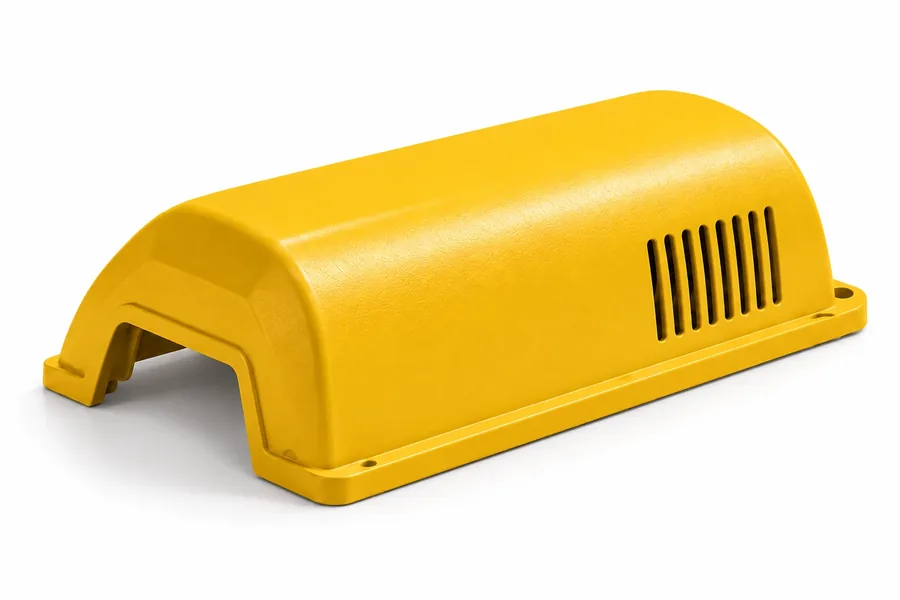
- Max. part size
- 2600×1600×600mmL × W × H, formed in one piece
- Max. sheet thickness
- 15mm8–10 mm is typical for housings
- Tooling lead time
- 1–3weeksvs. about 6–10 weeks for a comparable injection mold
- Tooling cost
- <1/10of a comparable injection mold
Sizes and forms of heavy-gauge thermoformed machine covers
Cover the whole machine,
or zone it for service.
- 01
Full machine covers
Whole machine or a large area
One-piece forming means fewer seams; long spans get flanges, stiffening contours or separate brackets.
- 02
Local guards
Around one mechanism
Enclose a moving part or a function zone; vents, viewing ports and cable openings are CNC-cut after forming.
- 03
Access panels
Where you open most often
Separate panels at frequent service points, with hinges or quick-release fasteners, so neighboring parts stay put.
Up to 2600 × 1600 × 600 mm per part; larger covers are formed in sections and assembled.
Coverage decides the split. Three common forms:
Examples
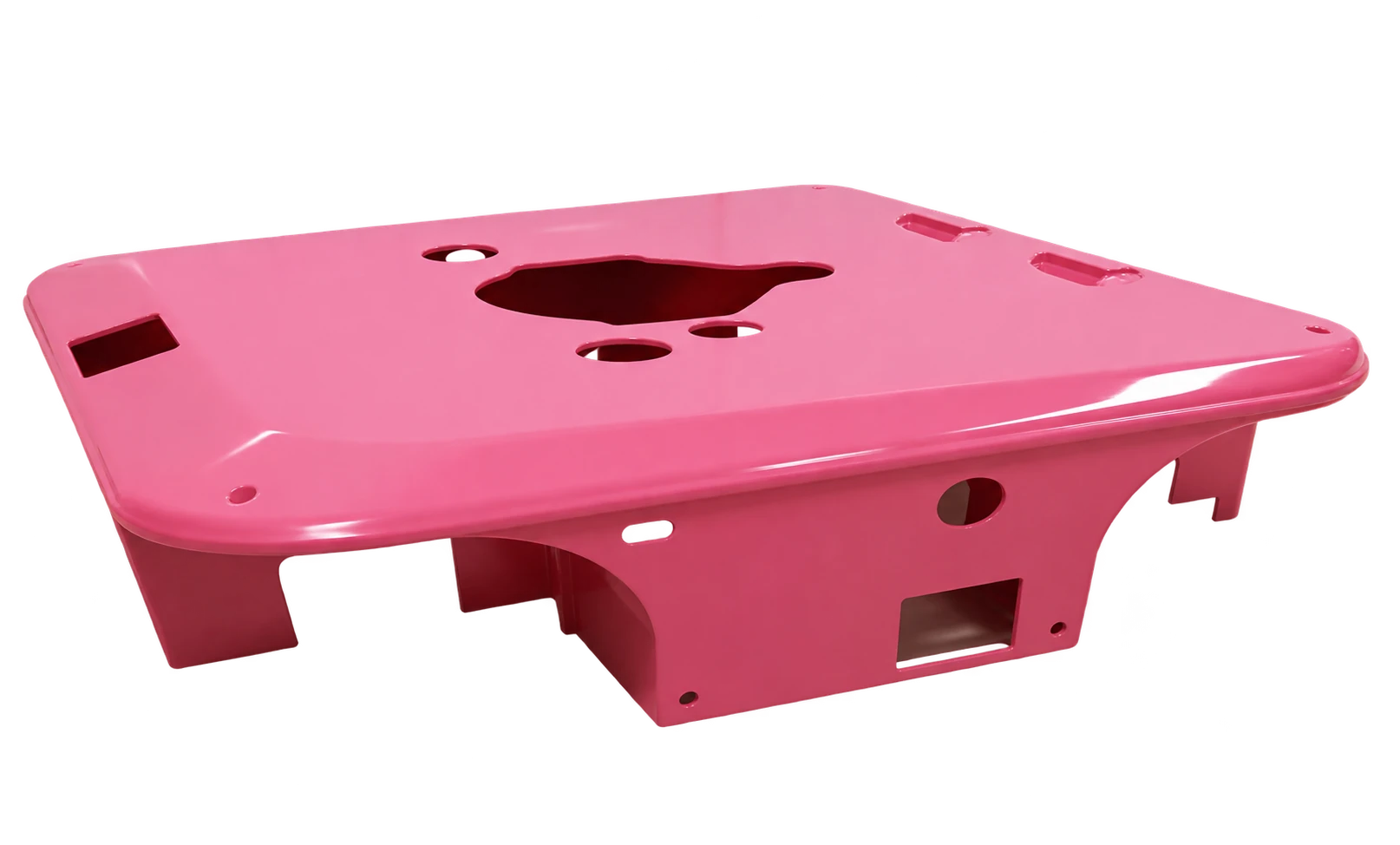
Warehouse robot cover 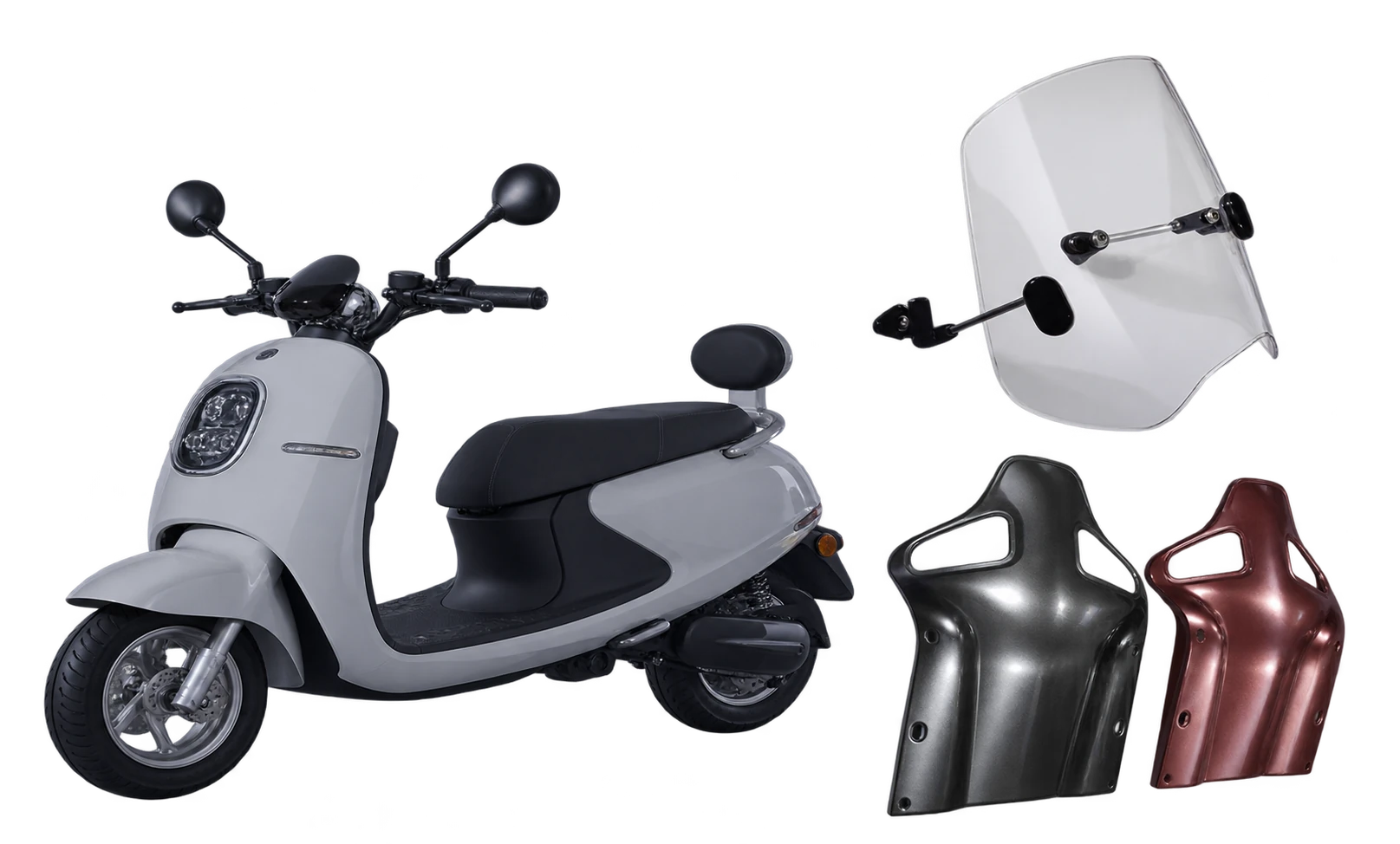
E-scooter front covers and windshields 
Car roof box 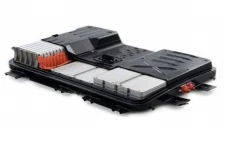
Power battery sealing cover 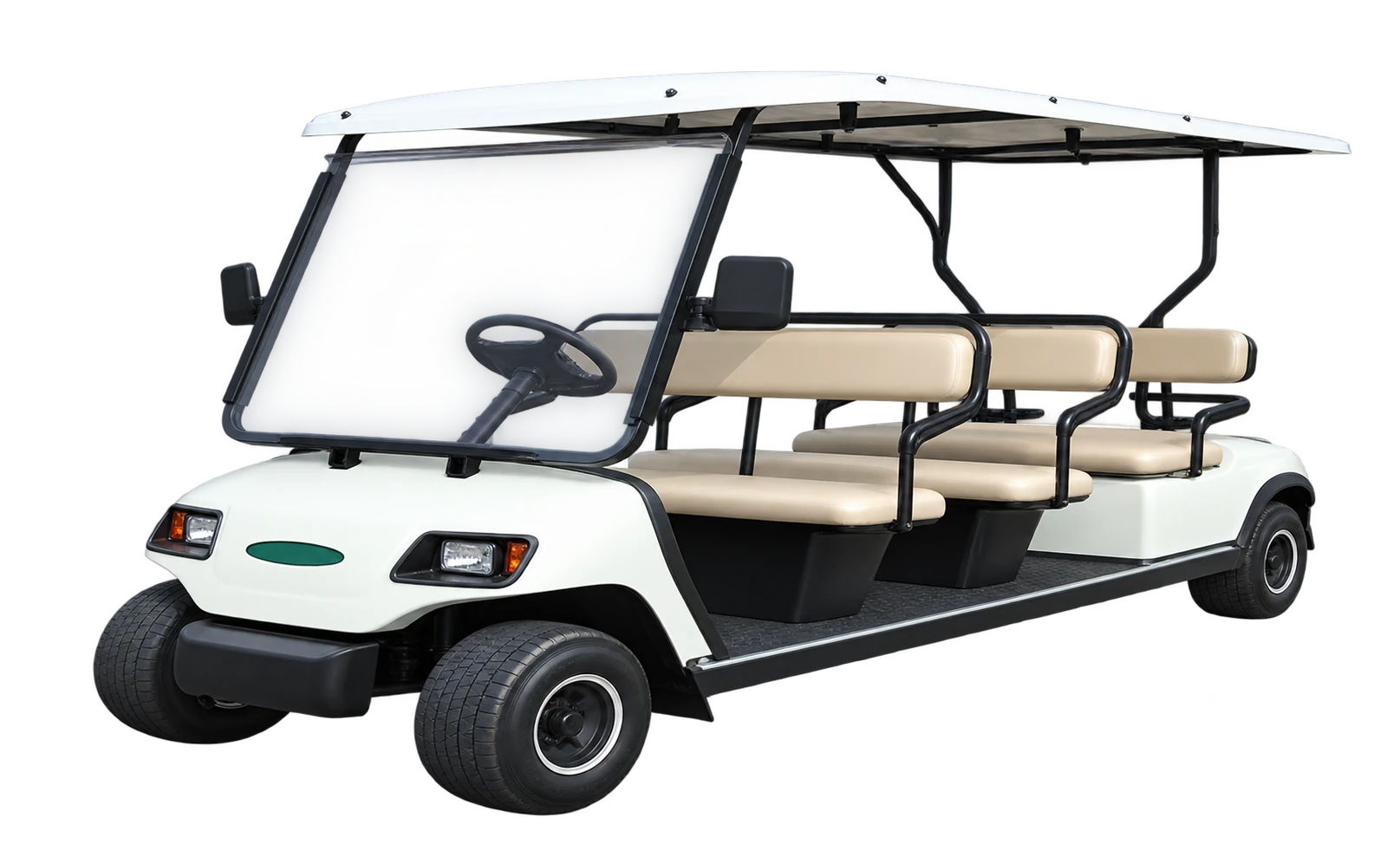
Golf cart roofs and parts 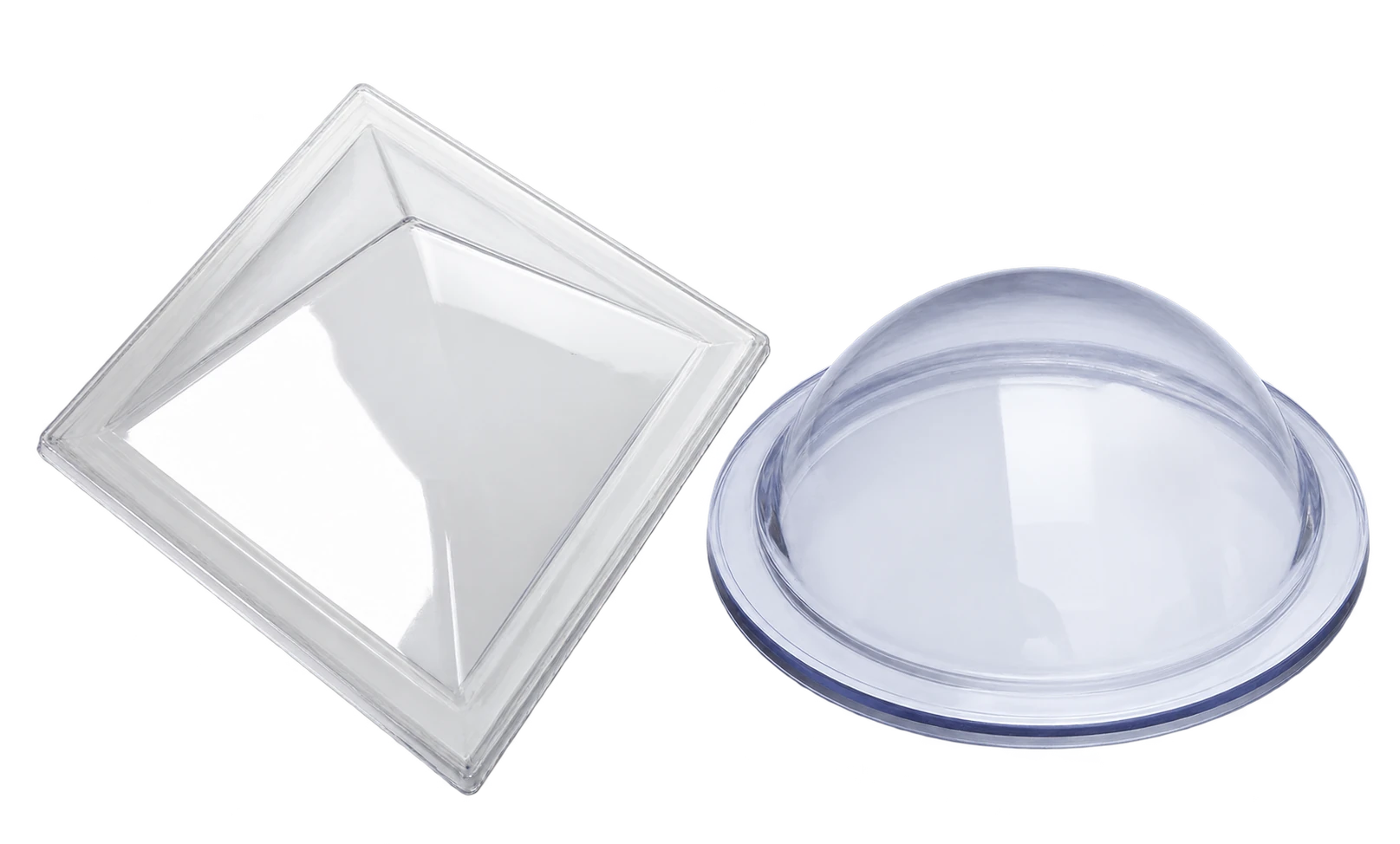
Round and conical skylight domes
Images from the FUNYO company profile. Some show the complete product; the formed part is the one named in the caption.
Where thermoformed machine covers are used
Applications
for this product.
Explore related industries through equipment applications and component requirements.
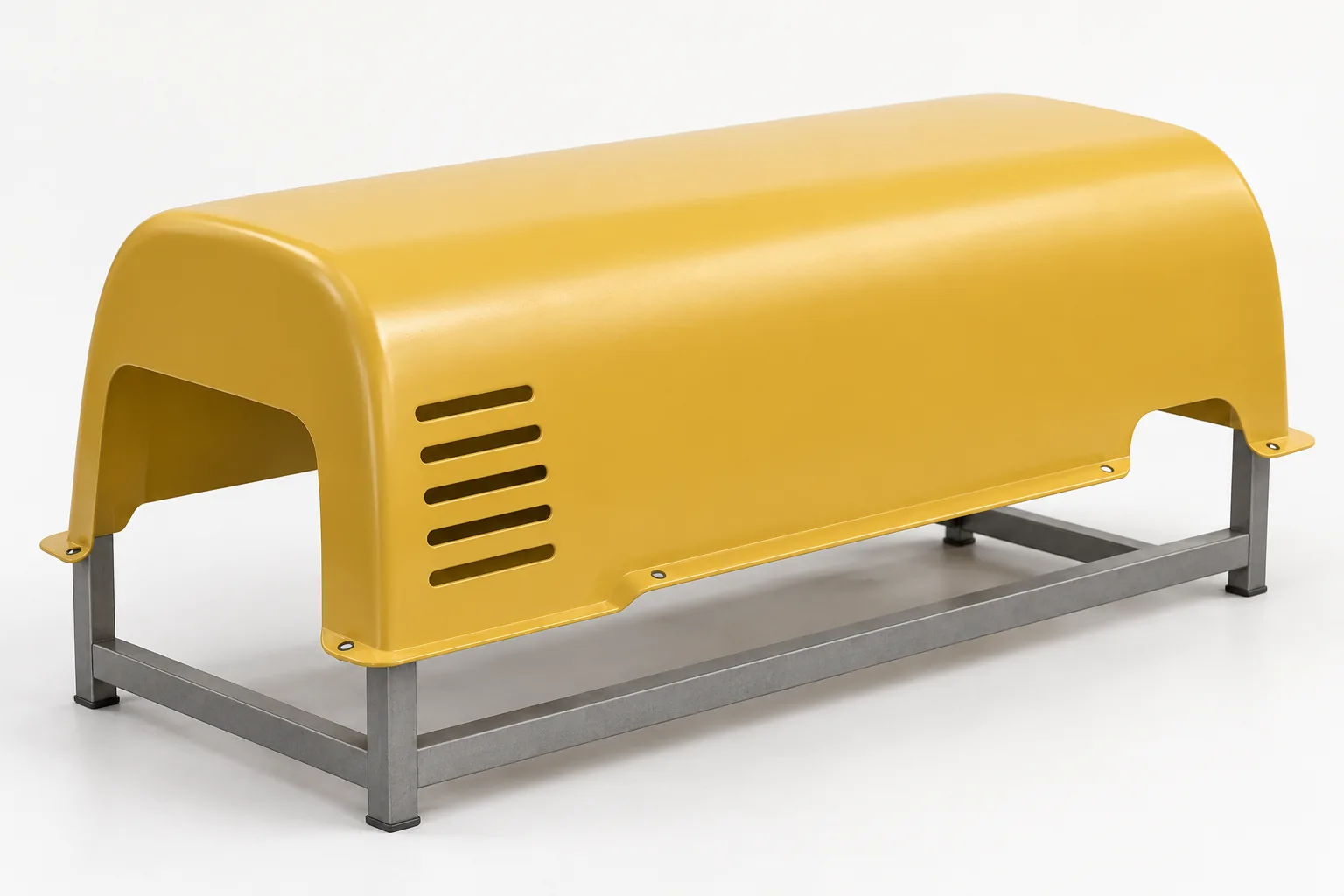 Illustration01
Industrial automation & machinery
Machine covers, side shrouds and maintenance covers.
Explore the industry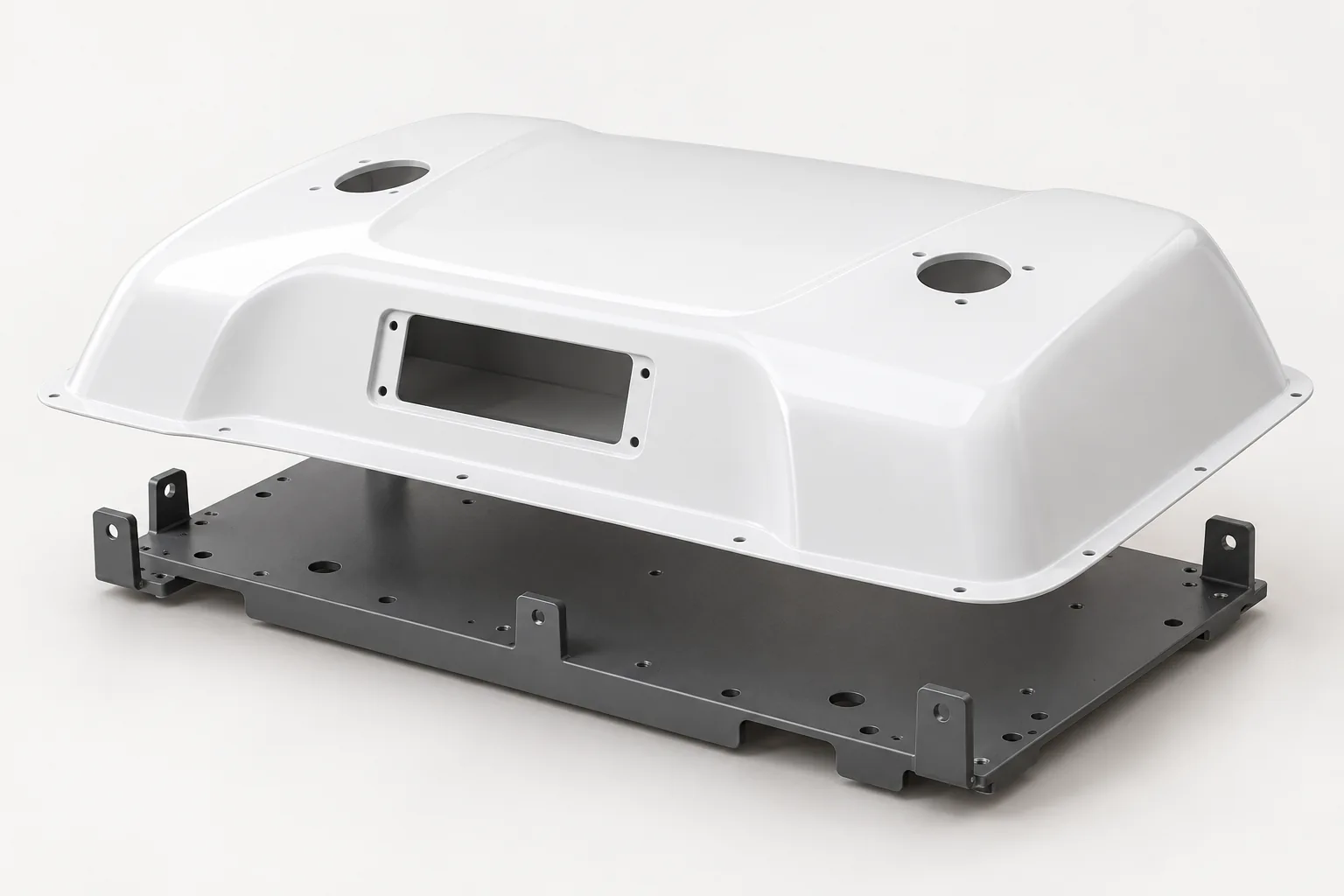 Illustration02
Robotics & autonomous equipment
Robot service covers and chassis shrouds.
Explore the industry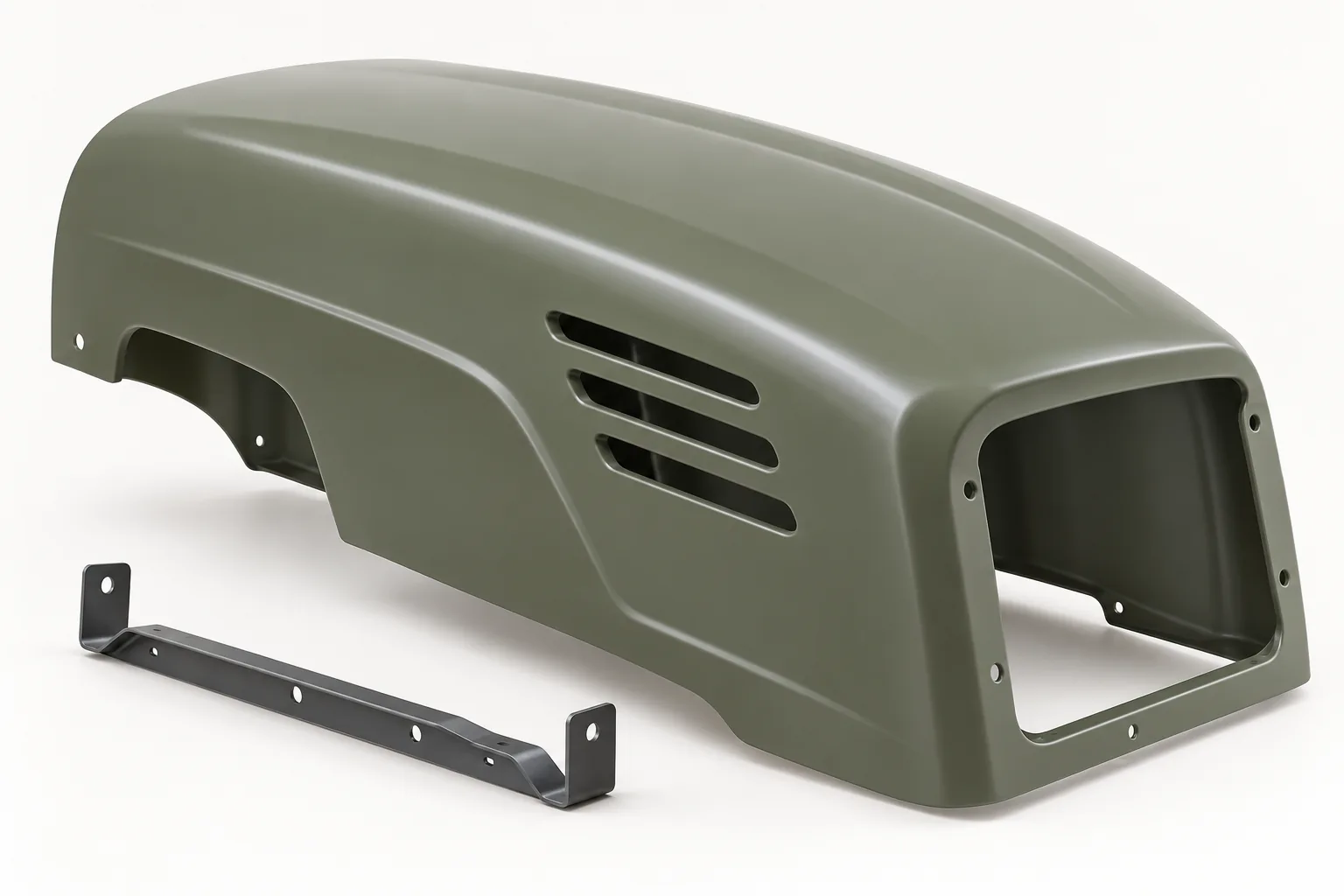 Illustration03
Agriculture & construction equipment
Engine hoods, side panels and fenders.
Explore the industry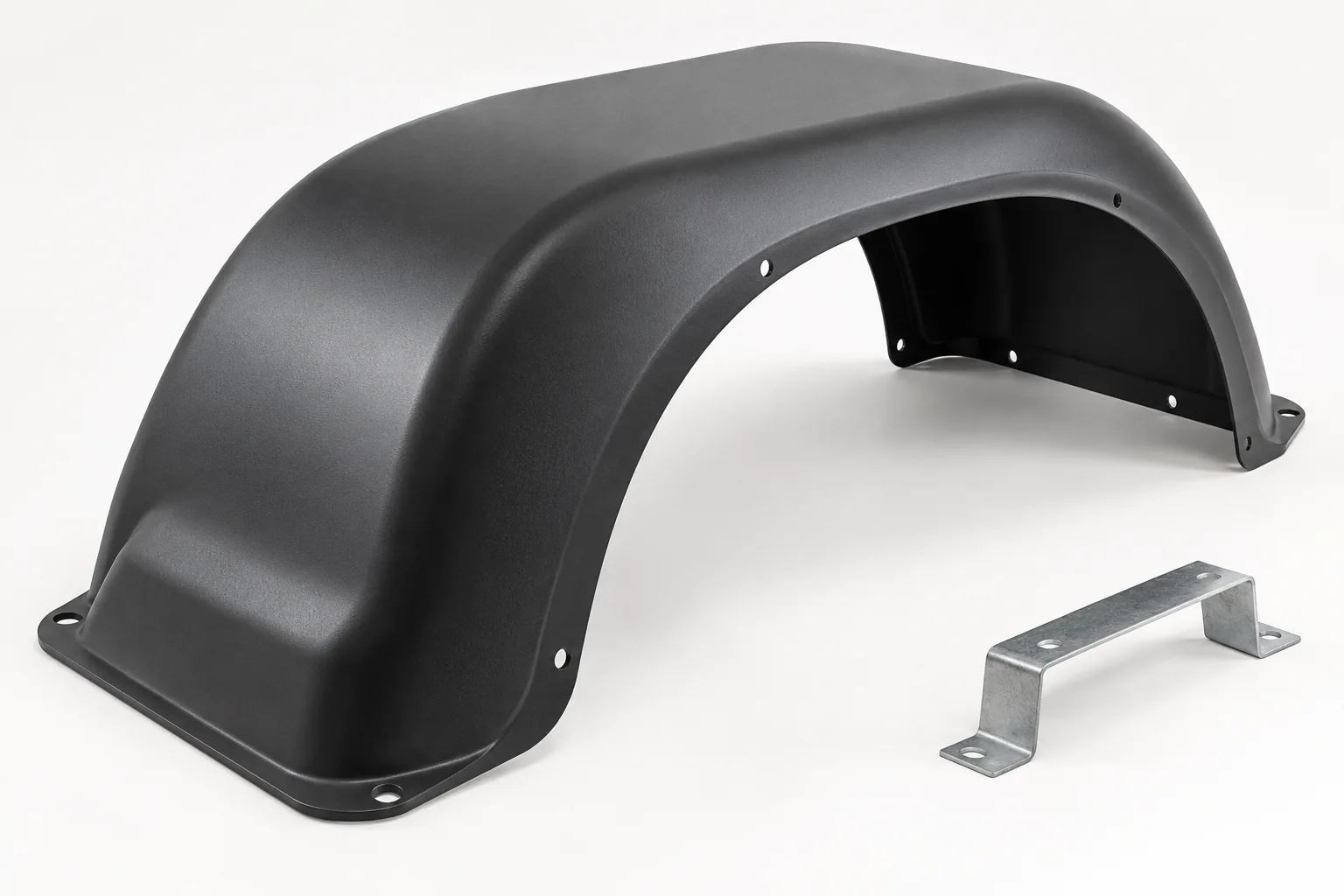 Illustration04
Automotive & transportation
Front covers, fenders and exterior covers.
Explore the industry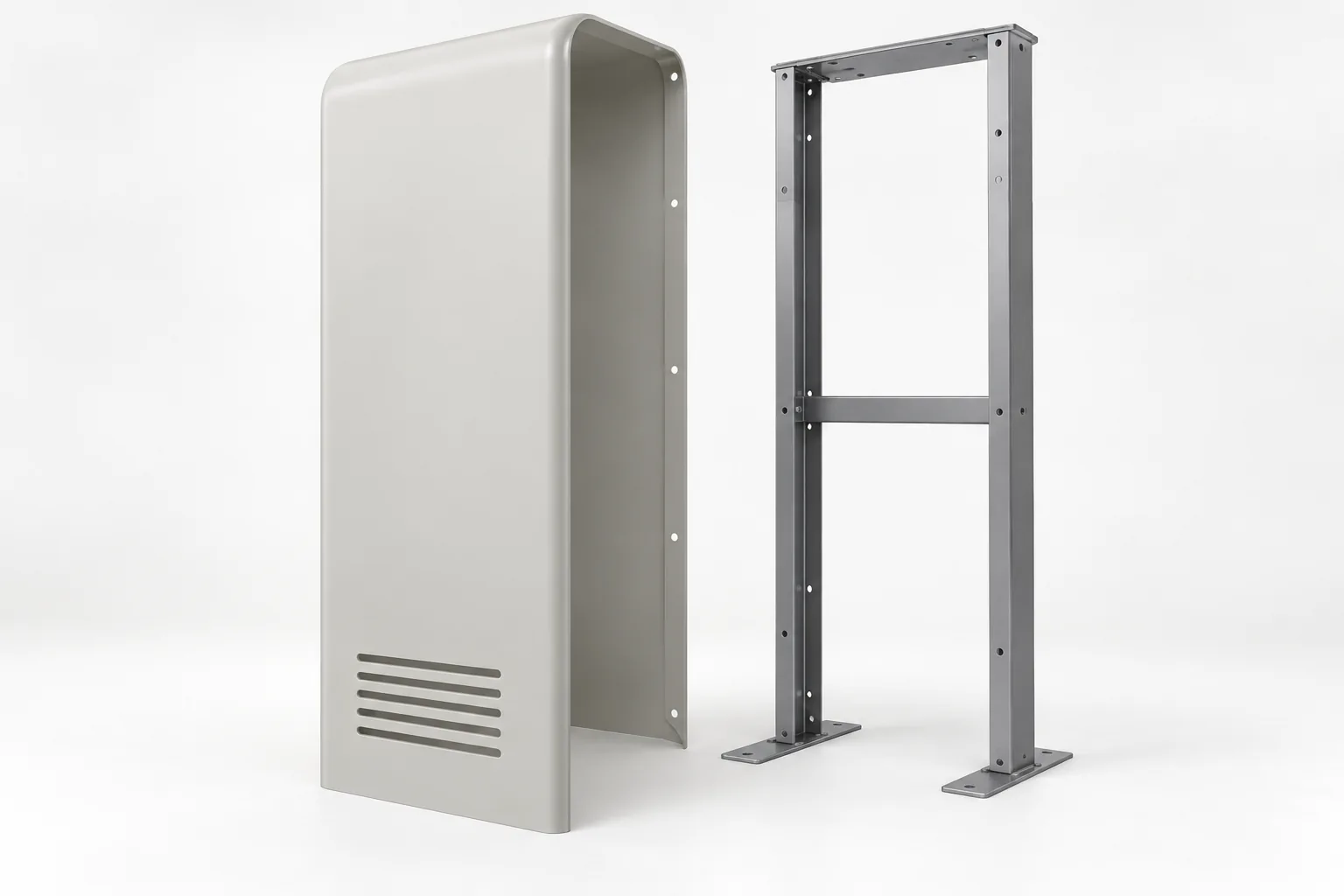 Illustration05
EV, battery & energy systems
Service covers for energy-storage and charging equipment.
Explore the industry 06
Marine, sports & recreation
Covers for sports equipment and amusement rides.
Explore the industry
Heavy-gauge thermoforming vs injection molding vs sheet metal
Why machine covers
move to heavy-gauge.
The same large cover, made three ways:
Send drawings, answer in 2 working days| Heavy-gauge thermoforming | Hand-laid fiberglass | Sheet metal | |
|---|---|---|---|
| Consistency | Tool and machine set thickness and finish, part to part | Thickness and surface vary by operator | Consistent, but curves need welding |
| Curved shapes | Large curves and radii in one piece | Complex curves possible | Mostly bends; curves are costly |
| Production | Machine forming plus CNC trim; steady cycle | Lay-up, cure and finishing per part; slow | Cut, bend, weld, paint |
| Surface | Color runs through the sheet, so scratches don't expose a base color | Needs gelcoat or paint | Needs anti-rust paint |
| Tooling | About 1–3 weeks, under 1/10 of an injection mold | Needs a fiberglass mold | Mostly bending fixtures |
General comparison; we confirm against your drawing, material and volumes.
Design options for thermoformed machine covers
Off in order,
back on to datum.
Covers are the parts that get opened most. We settle how service works first, then the split and the fixing points.
Lift off wholeFull access inside
The whole cover comes off. We check the handling route, part weight and where to hold it.
Remove by zonePanels at service points
Frequently serviced zones become their own panels; split lines and fasteners stay clear of neighboring parts.
Hinge openHinges and stays
Opens on hinges with a stay. Swing range, hinge loads and support points are confirmed on the sample.
Hinges, stays and interlock switches fit as separate parts. If you need an interlock, tell us where it mounts and how the cover moves.
Sheet materials for thermoformed machine covers
Pick the sheet
for where the cover lives.
8–10 mm sheet is typical, up to 15 mm. By operating condition:
Heavy-gauge thermoforming| Condition | Typical sheet |
|---|---|
| Indoor equipment | ABS: stiff and easy to machine. |
| Viewing windows, clear guards | PC or PETG: clear and impact resistant. |
| Washdown, chemical contact | PP, PE or PVC: chemical resistant. |
| Outdoor sun | A weatherable grade or surface treatment, sourced per project and checked on samples for color change. |
| Near heat sources | Give us the temperature and distance; we choose a heat-resistant grade and verify it on samples. |
Exact grade, color and texture are approved on physical swatches and samples.
Factory, CNC trimming and inspection
Forming, trimming, inspection:one plant in Zhuhai.
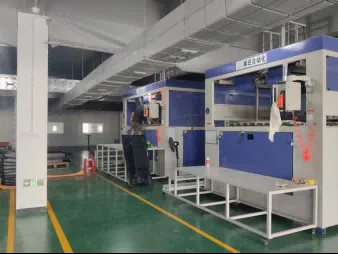
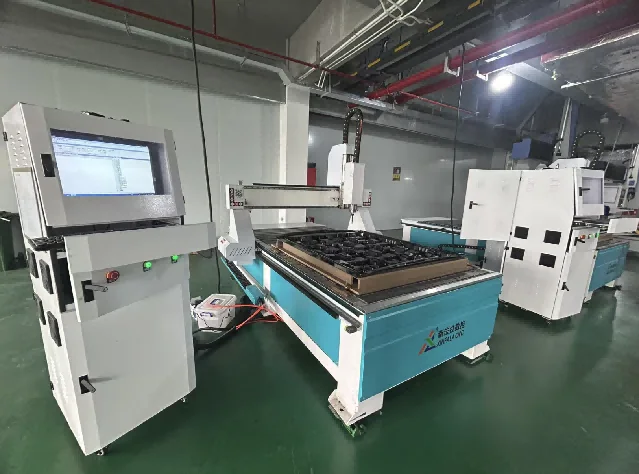
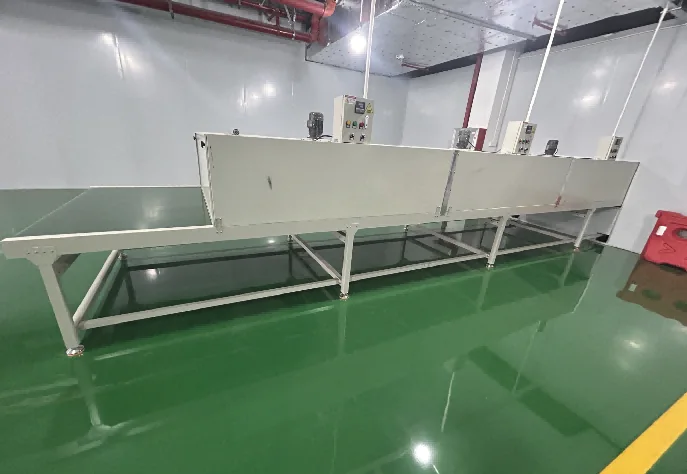
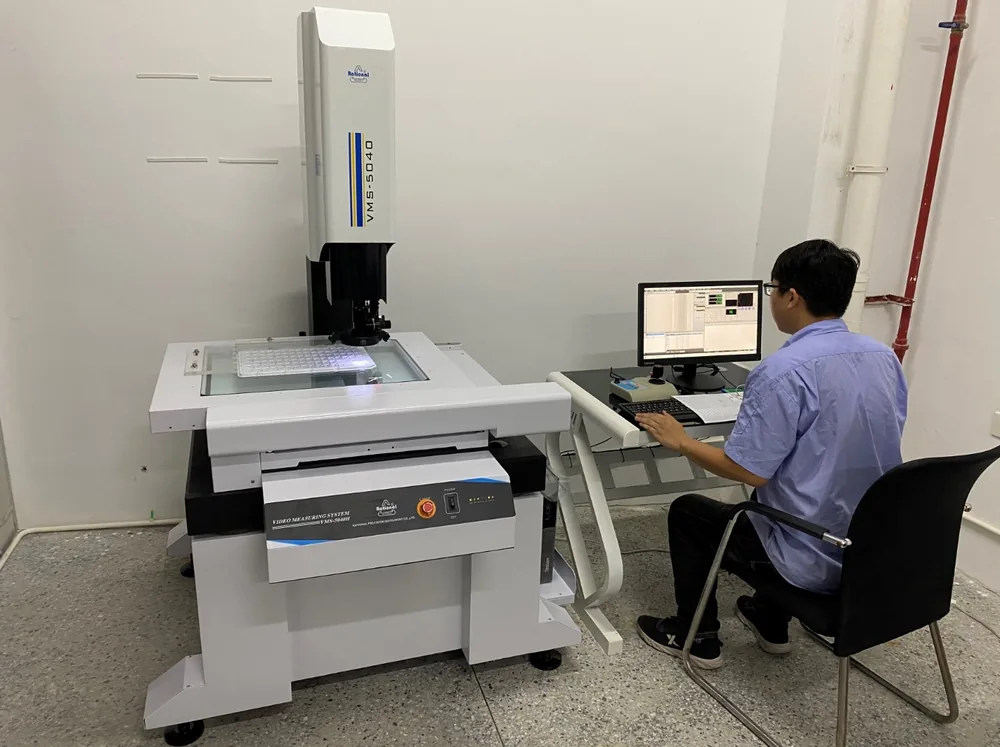
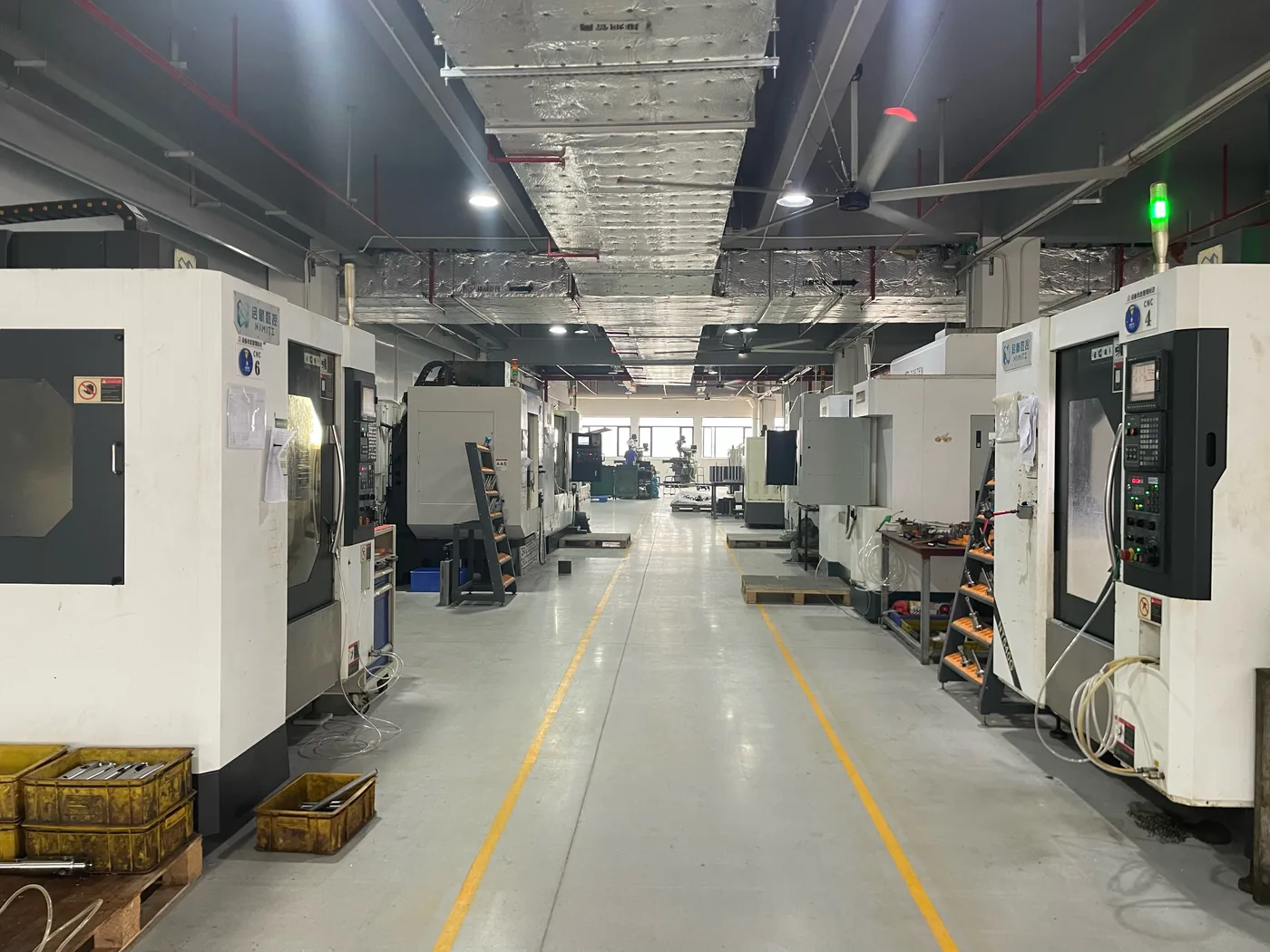
FUNYO started in precision machining in 2004 and has been thermoforming since 2013. Heavy-gauge forming, CNC trimming and dimensional inspection all happen in our Doumen plant, and we machine our own forming tools, so revisions don't wait on outside shops.
Facts you can check
- 2004
- Founded; 20+ years of precision machining
- 2005
- Became a tier-1 supplier to Gree
- ISO 9001 · 14001
- Quality and environmental management certified
- 2024
- Recognized as a High-Tech Enterprise
- ABS · PET/PS
- Own plant for thermoforming sheet
- 4 hours
- Response to design requests
Selected long-term customers













These relationships cover precision formed trays, CNC parts and other work. Listed in no particular order.
Lead time from drawing to delivery
From drawing to production,
and how long each step takes.
Typical timings. Complex parts or special materials get a specific schedule when we quote.
- Within 4 hours
Response
An engineer contacts you to confirm use, size and quantities.
- 2 working days
Evaluation and quote
We tell you whether heavy-gauge fits and quote it side by side with injection molding.
- About 1–3 weeks
Tooling
After design review we machine the forming tool in-house.
- By complexity
Samples
Formed, trimmed and drilled, then fitted to your frame or mating parts.
- Per order
Production
Checked against the approved sample for size and finish, then packed and shipped.
Heavy-gauge thermoformed machine covers: FAQ
Send photos of the machine.
We'll work out the cover.
Outside dimensions, mounting points and how it's serviced, plus the operating environment, are enough to start. No full drawing? Start with photos.
FAQ
For 300–3,000 machine covers and shrouds per year, should I compare thermoforming and injection molding?
300–3,000 units is a quoting scenario, not a break-even threshold. Compare part size, assembly, material, tooling and unit costs before selecting a process.
What size and sheet thickness are available for thermoformed machine covers and shrouds?
The maximum single part is 2600 × 1600 × 600 mm, with sheet up to 15 mm. Housings commonly use 8–10 mm sheet. Finished dimensions depend on geometry and trimming allowance.
How does thermoforming tooling cost compare with injection molds, and how many weeks does it take?
Forming tooling costs under 1/10 of a comparable injection mold and takes about 1–3 weeks. Comparable injection molds take about 6–10 weeks. Confirm the scope against the drawing and material.
Does moving CNC-cut openings for a new model require another forming tool?
If the external geometry, sheet and forming datums stay unchanged, we can evaluate a CNC program and fixture change. Changes to the formed shape require a separate tooling review.
Can medical or industrial housings meet a UL 94 or IP rating?
Provide the target rating first. Material grades are sourced and sampled per project; the housing, seals and assembly must be assessed together. Final ratings depend on testing the complete equipment.
Which sheet materials are available for housings and transparent windows?
ABS, PC, PVC, PETG and PP can be formed. PC or PETG can be evaluated for transparent parts. PE, weatherable, flame-retardant and antistatic grades are sourced and sampled for the project.
Can I receive a response in 4 hours, and when will thermoformed samples be ready?
We respond in 4 hours and provide an applicability assessment and injection-molding comparison quote in 2 working days. Forming tooling takes about 1–3 weeks; sample timing is assessed against the part geometry.
Can a housing project of about 3,000 parts per year apply for no tooling charge?
Housing projects of about 3,000 parts a year under an annual supply agreement can apply for an assessment. The quotation and contract define charges, amortization and tool ownership; eligibility is not automatic.
Last updated:
Web Design & GEO by RUXO Studio