Thermoformed covers for construction machinery are heavy-gauge hoods, side covers, service doors, fenders and cab interior panels on excavators, wheel loaders, compact equipment and farm machines such as tractors and harvesters. They spend years on building sites and in fields, facing knocks, sun and rain, mud and pressure washing, winter cold and the heat around the engine, and the manufacturer has to supply spares for many years after the machine is sold. This guide explains how to write each requirement into the specification by location, how to design the mounting and how to keep spare parts available, and ends with a cover specification sheet you can download.
FUNYO heavy-gauge thermoforming forms single parts up to 2600 × 1600 × 600 mm (102.4 × 63.0 × 23.6 in) from sheet 6–15 mm (0.24–0.59 in) thick in ABS, PC, PVC, PETG and PP, and fits medium and large covers built at a few hundred to a few thousand units a year. Molds take about 1–3 weeks, and trimming and openings after forming are cut on 3-axis and 5-axis CNC machines.
Sort the covers by location first
Covers on one machine face very different conditions depending on where they sit. A single requirement for the whole machine over-designs some parts and under-specifies others.
| Part | Main requirement | Specification focus |
|---|---|---|
| Cab interior panels | Appearance, touch, flame | Color and texture standards, flame documentation |
| Top of the hood | Sun, standing water, color | Weather-resistant grade, drainage slope |
| Side covers and service doors | Impact, opening, cold | Impact-resistant grade, hinges and latches |
| Covers near the engine | Heat, shielding | Temperature at the mounting position, heat shield |
| Fenders and lower covers | Mud, stone impact, washing | Impact, gauge, washing method |
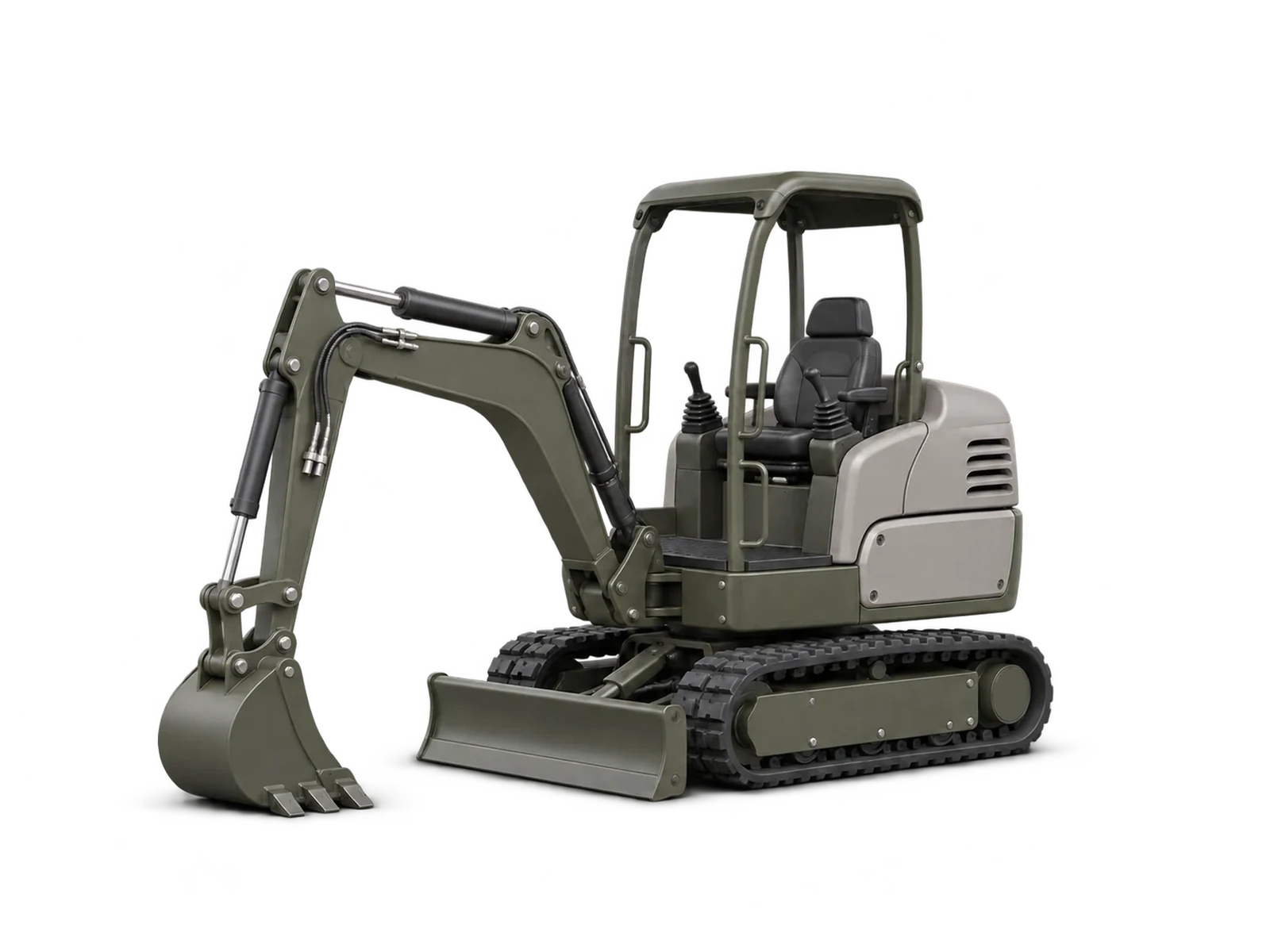
A practical rule: on one machine, write cab panels to appearance and flame requirements, external covers to impact and weathering requirements, and covers near the engine to a separate heat requirement. Each part can then use the most suitable sheet, and the cost of the whole cover set becomes easier to read.
Cab interior panels: appearance, touch and flame
Cab interior panels are the parts closest to the operator, so their appearance and feel shape the impression of the whole machine, and they often carry a flame requirement as well.
| Requirement | How to specify | Notes |
|---|---|---|
| Color and texture | Standard reference and viewing conditions | Make a panel set from one sheet batch |
| Feel | Texture and gloss | Texture hides everyday scuffs |
| Flame | Target rating and documentation | Checked at the thinnest formed wall |
| Mounting and noise | Clips, screws and damping pads | No rattles under vibration |
A practical rule: when interior panels carry a flame requirement, check the thickness in the material documentation against the thinnest formed wall, as described in flame-retardant thermoforming materials. When interior panels must match the exterior covers in color, use one color standard for both and compare them under the same light. Texture choices are covered in textured thermoformed parts.
Cabs are tight and full of curves, so interior panels are often split into several parts. Put the split lines where they are least visible and cover the joints with trim strips or overlaps. Agree how rattles will be checked as well: a short drive or a vibration test on the assembled cab finds loose clips before machines leave the plant.
Impact and cold: the most common problems on site and in cold regions
The most common damage to covers on sites and in fields is a crack from a stone, a branch or a tool, and it happens more often in winter in cold regions.
Impact resistance drops as temperature falls, and long sun exposure makes plastics more brittle as well. Impact verification should therefore cover three states: room temperature, low temperature and after weathering. State the minimum service temperature, the impact test method and the pass criterion in the specification, and confirm them on formed samples. Take impact test pieces from formed parts, including deep corners and areas near holes, because those are where problems appear first. Weathering verification is covered in outdoor thermoformed enclosures: UV and color.
A practical rule: when machines are sold into cold regions, or covers sit low or on the sides where knocks are likely, choose an impact-resistant grade and add gauge or ribs where needed. Covers on top, out of reach of most knocks, can focus on weathering and appearance. The link between gauge and stiffness is covered in heavy-gauge sheet thickness.
Sun, color and washing
Machines stand outdoors for long periods, so their covers need weather-resistant grades, and because machine color is often part of the brand, color consistency matters too.
The top of the hood and sun-facing sides see direct sun all day, so use a weather-resistant grade or a capped sheet and compare candidates with accelerated weathering on samples. Approve the brand color against a physical standard and make all covers on one machine from the same sheet batch. Give top surfaces a drainage slope to avoid standing water.
Construction machines are often pressure-washed to remove mud, so state the washing method and the media the covers may meet, such as muddy water, oil and cleaning agents. A practical rule: on areas that are pressure-washed often, avoid deep grooves that trap mud and round the edges so less dirt sticks.
Near the engine: heat resistance and shielding
Covers near the engine, the hydraulics and the exhaust need the maximum temperature at the mounting position checked against the heat resistance of the material.
State the maximum temperature at each cover's position so the supplier can choose material accordingly. When the temperature approaches the material's limit, add a heat shield inside the cover or increase the distance from the heat source. A practical rule: use metal for very hot areas such as around the exhaust. For areas that are warm rather than hot but heated for long periods, choose a grade with better heat resistance and confirm it by measuring temperature on a running machine. Record the temperatures after the machine has run at full load.
Vents and cooling openings between the cover and the engine bay are CNC-cut after forming, so moving them changes the program, not the mold.
Vibration and mounting: preventing cracks at hole edges
Construction machines vibrate for their whole working life, and cover damage often starts around the mounting holes. The mounting method affects service life more than the material does.
Keep the distance from a hole edge to the trim line or the start of a radius at no less than twice the starting sheet thickness as a design starting point, and confirm it on the first article. Example: with 8 mm (0.31 in) sheet, start the edge distance at 16 mm (0.63 in). Use slotted or oversized holes with rubber grommets or dampers to allow for vibration and thermal movement, and state the fastening method, because overtightening cracks hole edges. Check the fastening torque on the first article and write it on the drawing, so assembly lines in different plants tighten covers the same way.
A practical rule: where vibration is strong, spread the load with metal inserts or a metal backing plate. Service doors are opened often, so thicken or reinforce the areas where hinges and latches mount. Fastening options for equipment covers are covered in thermoformed machine covers and guards.
Spare parts: as long as the machine runs
Construction and farm machines stay in service for many years, and damaged covers need replacing. Spare quantities are small each year, but supply has to last.
A thermoforming mold costs about RMB 10,000 and is simple in structure, which suits spares needed only a few dozen times a year, and small orders can still be produced. Agree in the contract where the mold is stored and for how many years, how long spares will be supplied, and that each run is compared with the master sample for color and dimensions. Archive CNC programs and drawings by model and revision, so a model change only changes the program. Agree how spares are packed and labeled too: mark each part with its part number, revision and production date so dealers and service centers can find the right one quickly.
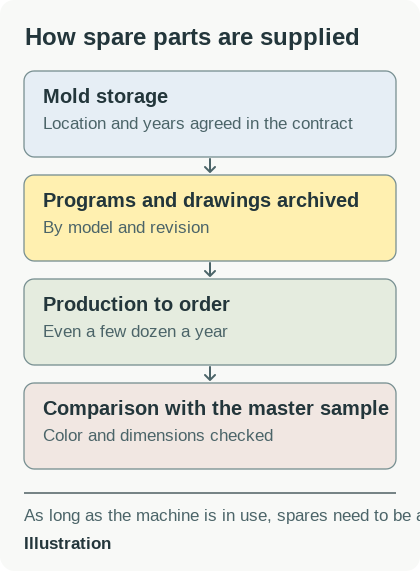
A practical rule: when several models in a range share the outer shape, their spares can share one mold too, with differences handled by CNC programs; see one mold, many models.
Export machines: write requirements by sales region
Construction machinery is widely exported, and one model may be sold into cold, hot and wet regions, so cover requirements should follow the sales regions.
Name the main sales regions in the specification, and either choose material for the harshest region or stock materials by region. Cold regions put the focus on cold impact, hot and sunny regions on weathering and heat, and wet regions on drainage. For overseas plants buying covers from China, freight and lead time are covered in sourcing thermoformed parts from China.
A practical rule: when one model's sales regions differ widely, choosing material for the harshest region keeps spare parts simple. When the regions are similar, choose for the main market. Use one part number for covers fitted at the factory and covers sold as spares, so dealers do not order the wrong version.
Put the requirements on a cover specification sheet
Collect the requirements above in one table, send it with the drawings and ask the supplier to answer line by line. The last column is for your machine's conditions.
| Item | Why it matters | How to specify | Your machine |
|---|---|---|---|
| Part location and function | Sets impact, heat and appearance needs | Part name and mounting position | |
| Impact requirement | Sites and fields bring frequent knocks | Impact test method and pass criterion | |
| Low-temperature requirement | Cold regions crack more parts in winter | Minimum service temperature and cold impact requirement | |
| Sun exposure and color | Long outdoor exposure fades and embrittles | Weather-resistant grade and color standard | |
| Heat requirement | Areas near the engine run hot | Maximum temperature at the mounting position | |
| Vibration and mounting | Most hole-edge cracks come from vibration | Mounting method, slotted holes and dampers | |
| Washing | Pressure washing and mud affect surfaces | Washing method and contact media | |
| Spare parts | Machines need spares for many years | Years of spare supply and mold storage | |
| Export regions | Climates and requirements differ by region | Main sales regions | |
| Annual and first-lot quantity | Sets how tooling and unit price compare | Annual demand and first lot |
Download the machinery cover specification sheet. FUNYO accepts STEP, IGES, DWG, PDF or photos, responds within 4 hours and returns a feasibility review with a comparative quote within 2 working days.
Which machinery parts should be metal or made another way?
Load-bearing structure, very hot areas such as around the exhaust, and steps and treads that operators stand on are more reliable in metal. Small parts needed in large numbers with fine detail on both sides should be compared against injection molding, and very large covers that must also carry load against fiberglass or metal. Heavy-gauge thermoforming fits large, curved cosmetic covers and interior panels built at a few hundred to a few thousand units a year.
Many machines combine processes: a metal frame and structure carry the load, and thermoformed covers provide appearance and protection. See thermoforming vs sheet metal enclosures and thermoforming vs fiberglass (FRP).
Next, send the cover list, the models and the sales regions to FUNYO. We will propose material and gauge by location and confirm impact and color on samples.