An energy storage cabinet enclosure is the body and outer trim of a commercial energy storage cabinet, an outdoor battery cabinet or an integrated storage unit: the frame, the doors, the front fascia, the top cover, side trims and duct covers. Inside are battery modules, power conversion and thermal management equipment, so the enclosure has to carry load, seal and ground, and it also has to present the brand in industrial parks, factories and outdoor sites. Many makers combine processes: a sheet metal cabinet with thermoformed parts where appearance matters. This guide explains which parts suit which process, who is responsible for protection rating and airflow, how to handle outdoor exposure and flame requirements, and what to watch in redesigns and export projects, and ends with a selection sheet you can download.
FUNYO heavy-gauge thermoforming forms single parts up to 2600 × 1600 × 600 mm (102.4 × 63.0 × 23.6 in) from sheet 6–15 mm (0.24–0.59 in) thick in ABS, PC, PVC, PETG and PP, and fits medium and large panels and covers built at a few hundred to a few thousand units a year. Molds take about 1–3 weeks, and openings and trimming after forming are cut on 3-axis and 5-axis CNC machines. For EV charger housings, see EV charger enclosures: thermoforming, injection molding or sheet metal.
Separate the cabinet body from the trim: what each part does
The parts of a storage cabinet do very different jobs. Assigning functions first and choosing a process for each part works better than building the whole cabinet one way.
| Part | Main function | Usual process |
|---|---|---|
| Frame and doors | Load, sealing, grounding, safety | Sheet metal |
| Front fascia | Appearance, brand, user interface | Heavy-gauge thermoforming, CNC-cut openings |
| Top cover | Drainage, shade, appearance | Thermoforming or sheet metal |
| Side trims | Appearance, concealment | Heavy-gauge thermoforming |
| Duct and vent covers | Airflow guidance, rain protection | Thermoforming or sheet metal, CNC-cut openings |
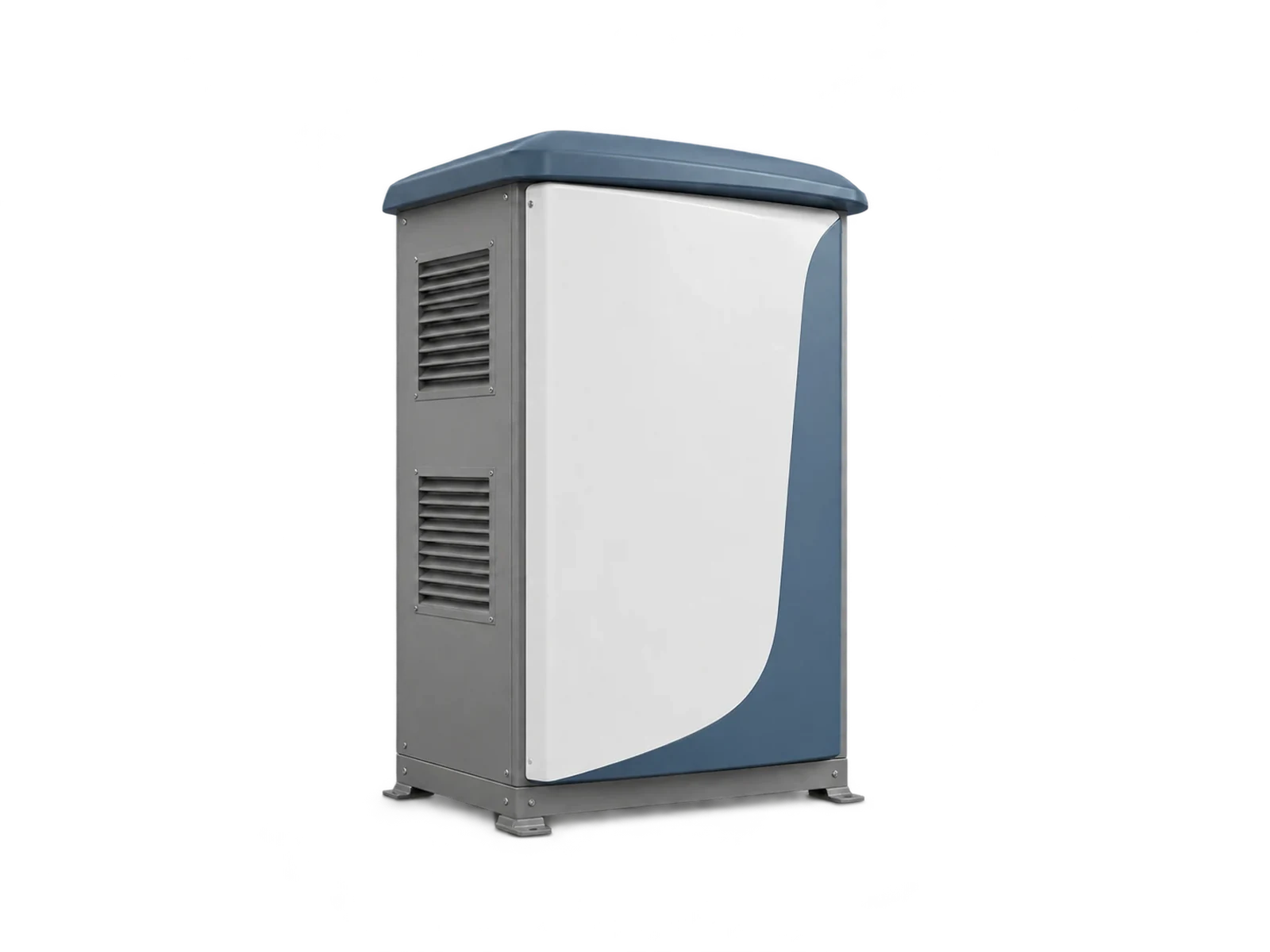
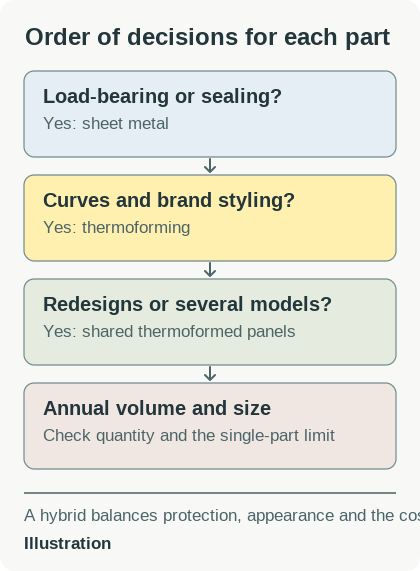
A practical rule: parts that carry weight, form the sealing boundary or take part in grounding should be sheet metal. Parts whose job is appearance, brand styling and concealment suit thermoforming. Where a part needs both, sheet metal inside can do the work while a thermoformed skin outside provides the look.
Why hybrids are common
Sheet metal and thermoforming each have strengths, and combining them gets the best of both.
Sheet metal is strong at carrying load, sealing and grounding, with stable costs and a natural fit for box-shaped cabinets. Thermoforming is strong at curved styling and brand identity, is light, and its molds take about 1–3 weeks at about RMB 10,000, so a redesign can refresh the whole cabinet by changing only the panels. Many storage makers build several capacity versions on one sheet metal cabinet and use thermoformed panels to set brands and series apart. A hybrid also lightens the doors and trim, which makes handling and installation easier.
A practical rule: a hybrid pays off most when the product must look different from competitors and will be restyled within a few years. A product with low appearance demands and no planned redesign is simpler in sheet metal alone. For a detailed comparison of the two processes, see thermoforming vs sheet metal enclosures.
Who is responsible for protection rating and sealing
The water and dust protection of a storage cabinet comes from the sheet metal body, the doors and the seals. Thermoformed panels are usually mounted outside the cabinet as trim and play no part in sealing.
State in the specification which structure delivers the protection rating, so the requirements on thermoformed panels can focus on appearance, weathering and mounting. Leave a gap between the panels and the cabinet for drainage and ventilation so rain cannot collect behind them, and keep mounting screws out of the sealing boundary, using brackets provided on the cabinet where needed.
A practical rule: when a thermoformed part itself forms a sealing boundary, such as a separate equipment bay cover, agree the sealing method and test separately and check water tightness on samples. When it is only trim, handle it to appearance and mounting requirements.
Airflow and ducts: CNC-cut openings
Batteries and power electronics produce heat, so the positions of air inlets, outlets, duct covers and grilles directly affect the temperature inside.
Air openings and grilles in thermoformed panels are CNC-cut after forming, so changing their position or shape changes the program, not the mold. Duct covers can be formed with curves that guide airflow while keeping rain from blowing straight in; keep their inner surfaces smooth so dust settles less and cleaning is easier. For thermoformed parts close to heat-producing components, check the temperature at the mounting position against the material's heat resistance, and add a heat shield or more distance where needed.
A practical rule: while the thermal design is still changing and openings may move, the flexibility of thermoformed panels is most valuable. Once openings are fixed and cover a large area, compare the cost of punched sheet metal.
Outdoor weathering and color
Outdoor storage cabinets face years of sun and rain, so thermoformed panels and top covers need weather-resistant grades, compared with accelerated weathering on samples.
Use a weather-resistant grade or a capped sheet for sun-facing top covers and panels, give the top cover a drainage slope, approve the brand color against a physical standard and make each batch of cabinets from one sheet batch. When one project ships in several batches, the color approved on the first batch remains the reference. Material choice and verification for outdoor parts are covered in outdoor thermoformed enclosures: UV and color.
A practical rule: for cabinets standing in full sun outdoors, choose and verify material for direct exposure. For cabinets in factory buildings or under canopies, shaded requirements are enough.
Flame performance and certification roles
When the cabinet requires flame-retardant materials, choose thermoformed panel material for the target flame rating and check the thickness in its documentation against the thinnest formed wall.
Deep corners and heavily drawn areas thin during forming, so the flame rating must be checked at the thinnest point; see flame-retardant thermoforming materials. Electrical safety, fire protection and certification of the whole cabinet remain with the cabinet maker, while the thermoforming supplier provides the material documentation and wall-thickness records of the formed parts. The records travel with the first shipment, and a spot check is repeated whenever the sheet batch changes.
A practical rule: panels far from batteries and electrical parts that serve only as trim can follow the customer's material requirement. For panels close to the battery bay or electrical parts, write the flame requirement and its verification separately in the specification.
Redesigns and several capacity versions
Storage makers often offer several capacity versions with similar cabinet sizes and want them to look like one family. Thermoformed panels can be grouped into a few standard widths, with each width sharing one mold and different user interfaces and openings handled by CNC programs.
In a redesign, the sheet metal cabinet stays the same and only the thermoformed panels change, giving the product a new generation of looks. When panels are restyled, keep supplying spares of the previous design for the agreed number of years. A heavy-gauge mold costs about RMB 10,000, and free tooling can be negotiated per order when volumes and batches are stable. For one mold serving several models, see one mold, many models.
A practical rule: when redesigns are planned within a few years or several capacity versions exist, design the panels separately from the cabinet and make them thermoformed. For a single version that will not change for years, compare an all-sheet-metal design.
Installation and maintenance: removing and replacing panels
Storage cabinets are inspected and serviced on site, so thermoformed panels should be easy to remove and replaceable one at a time in the field.
| Situation | Approach | Notes |
|---|---|---|
| Routine inspection | Panel mounted on the outside of the door, opening with it | Door sealing is unaffected |
| Removing panels for service | Screws in slotted holes or quick-release fasteners | Room for thermal movement and assembly tolerance |
| Field replacement | Panels supplied individually by part number | A damaged panel is replaced on its own |
| Transport protection | Panels fitted last, or filmed at the factory | Fewer scratches in transit |
A practical rule: when cabinets travel to site fully assembled, panels are easily knocked during lifting, so film them at the factory or fit them on site. When panels open with the door, mount hinges and locks on the sheet metal door and let the panel serve only as trim. Keep a small stock of panels for the most exposed positions at regional service centers, so a damaged fascia can be replaced on the next service visit. Fastener choices are covered in fastening thermoformed parts.
Points for export projects
Export storage cabinets go to regions with different climates and requirements. Name the main sales regions in the specification and either choose material for the harshest region or stock materials by region.
When overseas plants buy thermoformed panels from China, the panels can nest for shipping and freight can be worked out from a container loading plan; freight, sample approval and lead time are covered in sourcing thermoformed parts from China.
A practical rule: for regions with strong sun and large temperature swings, raise the weathering and heat requirements. For wet regions, focus checks on drainage and rain protection. When panel materials differ by region, give each regional version its own part number so service centers order the right one.
Put the requirements on a cabinet enclosure selection sheet
Collect the requirements above in one table, send it with the cabinet drawings and ask the supplier to answer line by line. The last column is for your project's conditions.
| Item | Why it matters | How to specify | Your project |
|---|---|---|---|
| Part list | Decides which process each part uses | Body, doors, fascias, top cover, duct covers | |
| Load and sealing | Load-bearing and sealing parts are sheet metal | Mark load paths and the sealing boundary | |
| Protection rating | Delivered by the cabinet and its seals | Rating and the structure responsible for it | |
| Appearance and brand | Curves and brand styling suit thermoforming | Color, texture and styling | |
| Airflow and openings | Ducts and openings affect temperature | Duct positions and opening areas | |
| Outdoor exposure | Sun-facing panels need weather-resistant grades | Installation environment and orientation | |
| Flame requirement | Checked at the thinnest formed wall | Target rating and documentation | |
| Models and redesigns | Shared panels save tooling | Capacity versions and their differences | |
| Export regions | Climates and requirements differ | Main sales regions | |
| Annual and first-lot quantity | Sets how tooling and unit price compare | Annual demand and first lot |
Download the storage cabinet enclosure selection sheet. FUNYO accepts STEP, IGES, DWG, PDF or photos, responds within 4 hours and returns a feasibility review with a comparative quote within 2 working days.
When should a storage cabinet be all sheet metal?
Products with low appearance demands, a single version and no planned redesign are simpler in sheet metal alone. Cabinets where every exterior part must carry load or form the sealing boundary belong in sheet metal, and very large single panels above the single-part limit that must show no joints should be compared against sheet metal or other processes.
Many storage cabinets combine processes: the sheet metal cabinet carries load, sealing and grounding, and thermoformed panels provide appearance, branding and redesigns.
Next, send the cabinet drawings, the styling design, the installation environment and the capacity versions to FUNYO. We will propose which parts to thermoform and give material, gauge and tooling plans for the panels.